Appliance and Supply Hose Leaks in Camas, WA
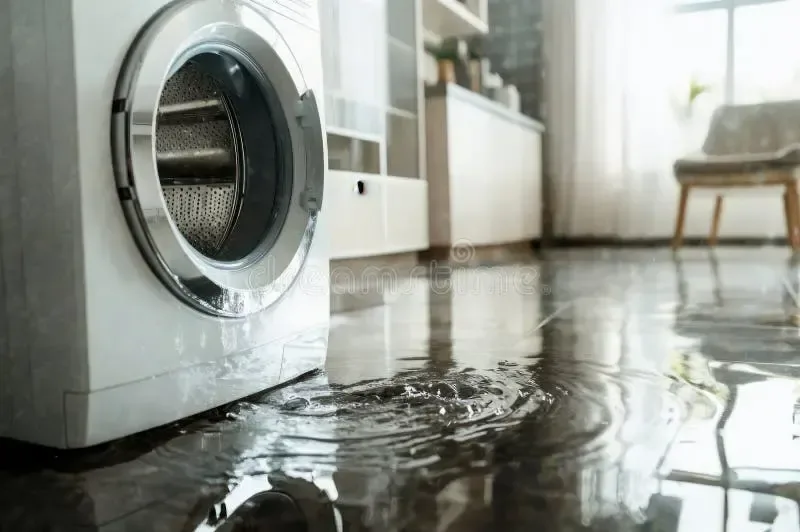
A burst washer hose, a dishwasher seal or an ice maker line can soak a kitchen or laundry room and the floor below. The extraction crew pulls the water and dries floors, cabinets and wall bases.
(888) 509-1696 Washer or dishwasher flooded the floor? Call now- Cabinet and toe-kick drying
- Under-floor moisture checks
- 24/7 dispatch
First steps for appliance and supply hose leaks, before the crew arrives
- 1
Shut the appliance valve
Close the supply valve behind the washer, fridge or toilet.
- 2
Unplug the appliance
Disconnect power only if you can reach the plug from a dry spot.
- 3
Check the floor below
Look for drips or stains on the ceiling under the leak.
- 4
Save the failed part
Keep the split hose or line for the plumber and the claim.
How appliance and supply hose leaks is handled, start to dry
The tech who does the walkthrough maps moisture before any equipment goes down, so the drying plan matches what is actually wet. Equipment stays until the readings say dry, not until it looks dry.
- 1
Find
Confirm the failed hose, seal or line and stop it.
- 2
Extract
Pull water from floors, under cabinets and below.
- 3
Open
Remove toe-kicks and wet wall bases for airflow.
- 4
Dry
Air movers and LGR dehumidifiers until readings say dry.
What does appliance and supply hose leaks cost in Camas, WA?
Appliance and supply hose leaks usually run $800 to $3,000 for one kitchen or laundry floor caught early, $3,000 to $7,000 when cabinets and walls got wet, and more when water reached the floor below.
One floor, caught early
$800 to $3,000
- Extraction
- Toe-kicks pulled
- Air movers and LGR
Cabinets and walls
$3,000 to $7,000
- Cabinet bases dried
- Wall bases opened
- Flooring lifted
Floor below reached
$7,000 to $12,000+
- Ceiling below opened
- Two levels dried
- Rebuild scoped separately
Ranges are typical, not a quote: the category of water, the square footage, the material class and how fast drying started move the number most. Run the water damage cost calculator for a closer planning range.
Appliance leaks are among the most common water losses in any home. A rubber washer hose splits, a dishwasher door seal fails, a plastic ice maker line cracks behind the fridge, or a toilet supply connection lets go. Clean supply water is Category 1; washer and dishwasher discharge is Category 2.
Where appliance water goes
The water rarely stays in the room where it started.
- Under vinyl and laminate flooring, where it hides
- Into cabinet bases and toe-kick spaces
- Through the floor to the ceiling or crawl space below
- Into the bottom of nearby walls
Appliance leak soaking the floor? The extraction crew runs 24/7.
Drying kitchens and laundry rooms
The crew extracts the floor, pulls toe-kicks so air can reach under the cabinets, and checks the subfloor and the room below with meters and thermal imaging. Upstairs laundry leaks get special attention, because the ceiling below fills first. For simple leak checks around the home, the EPA WaterSense program lists easy steps.
After the dry-out
Braided steel washer hoses, leak sensors under sinks and appliances, and a known shutoff valve make a repeat less likely. If the loss becomes a claim, the Washington Office of the Insurance Commissioner explains how homeowner policies treat sudden appliance failures.
Where the appliance and supply hose leaks crews work
The restoration crews cover ZIP 98607, from Downtown and the mill waterfront up to Prune Hill, Grass Valley, Fern Prairie and the homes around Lacamas Lake and Round Lake.
Nearby coverage reaches Washougal, Vancouver, Fairview, Troutdale, Gresham.
Related water damage services nearby
Appliance and Supply Hose Leaks questions in Camas, WA
Short answers about appliance and supply hose leaks, from the first hour to the last reading.
Can wet kitchen cabinets be saved?
Often. Pulling the toe-kicks and drying the cabinet bases with directed air saves many cabinets. Particleboard that swelled usually has to be replaced.
Why is the floor still wet under the laminate?
Laminate and vinyl trap water underneath. Meters find it, and the flooring often has to be lifted so the subfloor can dry.
How long does an appliance leak take to dry?
Most appliance leaks dry in 3 to 5 days. Cabinets, hardwood and two-level losses take longer.
Does insurance cover a washer hose leak?
A sudden hose failure is often covered, while a slow, repeated leak usually is not. Your insurer decides under your policy.
How can I prevent another appliance leak?
Use braided steel supply hoses, add leak sensors, replace hoses every few years and know where each shutoff valve is.
Still dealing with it?
Dry out the kitchen or laundry floorWater under flooring and cabinets does not dry by itself.
The extraction crew pulls the water and dries the cabinets, floors and the room below to the readings.