Water Extraction and Removal in Camas, WA
The extraction crew pulls standing water out of carpet, pad, hardwood and crawl spaces with truck-mounted units, so the drying equipment that follows has far less water left to fight.
(888) 509-1696 Get standing water pumped out before it wicks- Truck-mounted extraction units
- Weighted carpet extraction tools
- 24/7 dispatch
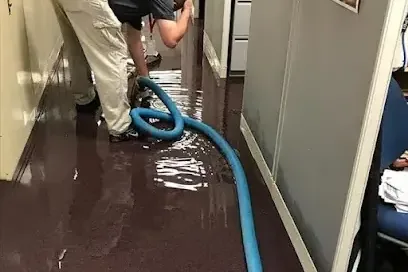
First steps for water extraction and removal, before the crew arrives
- 1
Stop the source
Close the main shutoff on your side of the meter, or the valve at the fixture.
- 2
Kill wet circuits
Switch off breakers for flooded rooms, but only if the panel area is dry.
- 3
Lift what you can
Move rugs, furniture legs and boxes off the wet floor onto blocks or foil.
- 4
Photograph it all
Wide and close shots of every wet room, taken before anything is moved.
How water extraction and removal is handled, start to dry
The tech who does the walkthrough maps moisture before any equipment goes down, so the drying plan matches what is actually wet. Equipment stays until the readings say dry, not until it looks dry.
- 1
Inspect
Find the source and map the wet edge with meters.
- 2
Extract
Truck-mounted and portable units pull the standing water.
- 3
Dry
Air movers and LGR dehumidifiers set to each room's load.
- 4
Confirm
Daily readings until materials match a dry reference.
What does water extraction and removal cost in Camas, WA?
Water extraction usually runs $500 to $1,500 on its own for one room, and $1,500 to $4,000 when extraction leads into a full dry-out of several rooms. Category 3 water and crawl spaces add removal and treatment to the job.
One room, clean water
$500 to $1,500
- Carpet and pad extracted
- Hard floors cleared
- Source checked
Several rooms
$1,500 to $4,000
- Truck-mounted extraction
- Pad removed
- Drying equipment set
Crawl space or Category 3
$3,000 to $8,000
- Submersible pumps
- Wet insulation out
- Antimicrobial treatment
Ranges are typical, not a quote: the category of water, the square footage, the material class and how fast drying started move the number most. Run the water damage cost calculator for a closer planning range.
Extraction is the step that decides how long everything after it takes. A soaked carpet gives most of its water up to a weighted extraction tool in a single pass. Left for air movers alone, the same water takes days to evaporate and spreads into pad, tack strip, baseboards and drywall along the way.
What the extraction crew pulls water from
Every surface needs a different tool, and the crew brings all of them on the first visit.
- Carpet and pad, with weighted extraction tools that press water out of the pad underneath
- Hardwood, with panel systems that draw water out of the boards and the gaps between them
- Tile, vinyl and concrete, cleared with squeegee wands and pumps
- Crawl spaces, pumped out with submersible pumps before wet insulation comes down
Standing water on the floor? Extraction is the first job, 24/7.
Why extraction comes before drying
Air movers and LGR dehumidifiers remove water by evaporation, and evaporation is slow. Every gallon left behind has to come out of the air one dehumidifier tank at a time, which adds days of equipment and raises the odds that drywall, cabinets and hardwood have to be cut out. In cold, damp winter weather the gap grows, because cool air holds less moisture. For questions about how a policy treats the loss, the Washington Office of the Insurance Commissioner explains homeowner coverage in plain terms.
Extraction in older and newer local homes
From the older houses around Downtown to the newer homes that went up around Lacamas Lake from the 1990s on, water heads for the lowest point it can find: a crawl space, a lower floor or the room under a laundry. The walkthrough follows it there with meters before any equipment goes down. Small leaks count too: the EPA WaterSense Fix a Leak Week page shows how to spot the slow drips that end up as wet subfloor.
Where the water extraction and removal crews work
The restoration crews cover ZIP 98607, from Downtown and the mill waterfront up to Prune Hill, Grass Valley, Fern Prairie and the homes around Lacamas Lake and Round Lake.
Nearby coverage reaches Washougal, Vancouver, Fairview, Troutdale, Gresham.
Related water damage services nearby
Water Extraction and Removal questions in Camas, WA
Short answers about water extraction and removal, from the first hour to the last reading.
How quickly does water extraction need to start?
As soon as it can. Water wicks into pad, drywall and framing from the first hour, and mold can start within 24 to 48 hours. Early extraction keeps more materials dryable in place.
Can wet carpet be saved after water extraction?
Often, when the water was clean and extraction started early. The pad usually goes, while the carpet can be extracted, dried and relaid. Carpet that sat in sewage or flood water is removed.
Is a shop vac enough for water extraction?
For a small spill, maybe. For a soaked room, no: a shop vac cannot press water out of pad or pull it from under hardwood, and the water left behind keeps spreading.
What does water extraction cost?
It is priced by the area and the water category, and it is usually part of a larger drying job. One room caught early often lands near the low end of the ranges above.
Does water extraction include the crawl space?
Yes, when water reached it. Submersible pumps clear standing water under the house, then wet insulation and vapor barrier come out so the joists can dry.
Will insurance pay for water extraction?
Extraction is usually part of a covered sudden and accidental loss, such as a burst pipe. Your insurer decides under your policy, and the moisture map and photos support the claim.
Still dealing with it?
Send the extraction truck to the houseEvery hour of standing water makes the dry-out longer.
The extraction crew pulls the water out first, then the drying team sets equipment to the readings.