Structural Drying and Dehumidification in Camas, WA
Surfaces dry fast; framing, subfloor and hardwood do not. The drying team sizes air movers and LGR dehumidifiers to the class of loss and keeps them running until readings match a dry reference.
(888) 509-1696 Need the framing dried properly? Call the drying team- LGR and desiccant dehumidifiers
- Daily psychrometric logs
- 24/7 dispatch
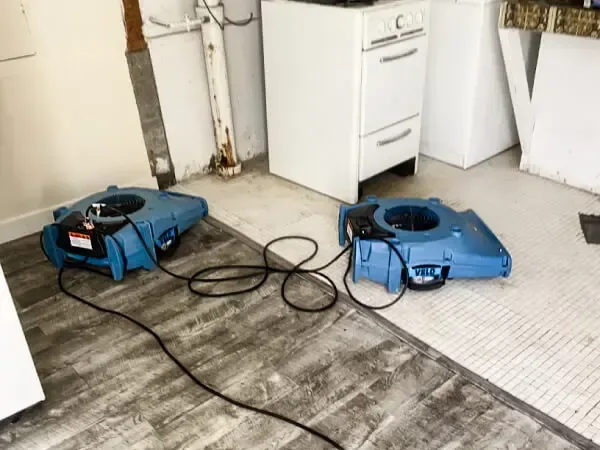
First steps for structural drying and dehumidification, before the crew arrives
- 1
Keep the house closed
Shut windows; cold damp air slows drying in winter.
- 2
Leave equipment running
Do not turn off air movers or dehumidifiers to save noise.
- 3
Keep doors as set
Rooms are closed or opened on purpose for the drying plan.
- 4
Empty nothing yourself
LGR units pump out; let the crew handle the equipment.
How structural drying and dehumidification is handled, start to dry
The tech who does the walkthrough maps moisture before any equipment goes down, so the drying plan matches what is actually wet. Equipment stays until the readings say dry, not until it looks dry.
- 1
Measure
Readings set the dry reference and the wet edges.
- 2
Set
Air movers and dehumidifiers sized to the class.
- 3
Adjust
Equipment moved daily as materials dry out.
- 4
Release
Pulled only when readings match the dry reference.
What does structural drying and dehumidification cost in Camas, WA?
Structural drying usually runs $1,000 to $3,000 for one room of Class 1 or 2 drying, $3,000 to $8,000 for several rooms or Class 3 losses, and more for Class 4 materials like hardwood and concrete.
One room, Class 1 or 2
$1,000 to $3,000
- Air movers and LGR
- Daily readings
- 3 to 4 days
Several rooms or Class 3
$3,000 to $8,000
- Ceiling and wall drying
- Heat added
- Drying log
Class 4 materials
$8,000 to $15,000+
- Desiccant dehumidifiers
- Hardwood panel drying
- Longer equipment time
Ranges are typical, not a quote: the category of water, the square footage, the material class and how fast drying started move the number most. Run the water damage cost calculator for a closer planning range.
Structural drying is the part of a water loss that decides whether it ends well. Drywall can feel dry in a day while the studs behind it, the subfloor under the carpet and the hardwood across the room are still wet. The drying team measures those materials every day and keeps the equipment running until they read within 2 to 4 points of a dry reference.
Class of loss sets the equipment
The IICRC S500 standard sorts losses by how much water is in the materials and how hard they are to dry.
- Class 1: a small area, little absorbed
- Class 2: a whole room, carpet and wall bases wet
- Class 3: water from above, ceilings and walls soaked
- Class 4: hardwood, plaster, concrete and other dense materials
Need materials dried to the readings? The drying team works 24/7.
Drying in cold, damp weather
Much of the year the outside air is cool and wet, so the house is closed up and conditioned. LGR dehumidifiers pull water from the air, desiccant units handle dense Class 4 materials, and heat speeds evaporation. Air movers are placed to each wall and floor, not just pointed at the room. For home energy questions once the equipment is gone, Energy Saver covers heating and moisture basics.
The drying log
Every day the crew records temperature, humidity and moisture readings, the equipment in each room and changes made. The log shows the adjuster why the job took the days it did. The Washington Office of the Insurance Commissioner has guidance on what to expect from a homeowner claim.
Where the structural drying and dehumidification crews work
The restoration crews cover ZIP 98607, from Downtown and the mill waterfront up to Prune Hill, Grass Valley, Fern Prairie and the homes around Lacamas Lake and Round Lake.
Nearby coverage reaches Washougal, Vancouver, Fairview, Troutdale, Gresham.
Related water damage services nearby
Structural Drying and Dehumidification questions in Camas, WA
Short answers about structural drying and dehumidification, from the first hour to the last reading.
What is a dry reference reading?
A moisture reading from the same kind of material in an unaffected part of the house. Drying is finished when wet materials read within 2 to 4 points of it.
Why not just open the windows to dry the house?
Outside air here is often cold and damp, which slows evaporation. A closed, conditioned house with LGR dehumidifiers dries faster.
How long does structural drying take?
Most losses dry in 3 to 7 days. Hardwood, plaster, concrete and crawl space framing take longer, and readings decide when equipment comes out.
Can hardwood floors be dried in place?
Often, with panel systems and desiccant dehumidifiers, if drying starts early. Boards that cupped badly or sat in dirty water may need replacing.
What is the difference between LGR and desiccant dehumidifiers?
LGR units cool the air to pull water out and work well in most rooms. Desiccant units use a drying wheel and work better in cold air and on dense materials.
Why do drying logs matter for insurance?
The log shows the readings, equipment and days behind the bill. Adjusters use it to see that drying followed the standard.
Still dealing with it?
Ask for a moisture map of the houseSurfaces look dry long before the framing is.
The drying team sizes the equipment to the class of loss and logs readings until materials test dry.