Storm Runoff and Flood Cleanup in Camas, WA
When heavy rain sends runoff into a crawl space or a lower floor, or creek water comes inside, the flood cleanup crew treats it as contaminated, removes what it soaked and dries the structure.
(888) 509-1696 Runoff came inside? Get the flood crew moving- Category 3 flood protocols
- Mud-out and material removal
- 24/7 dispatch
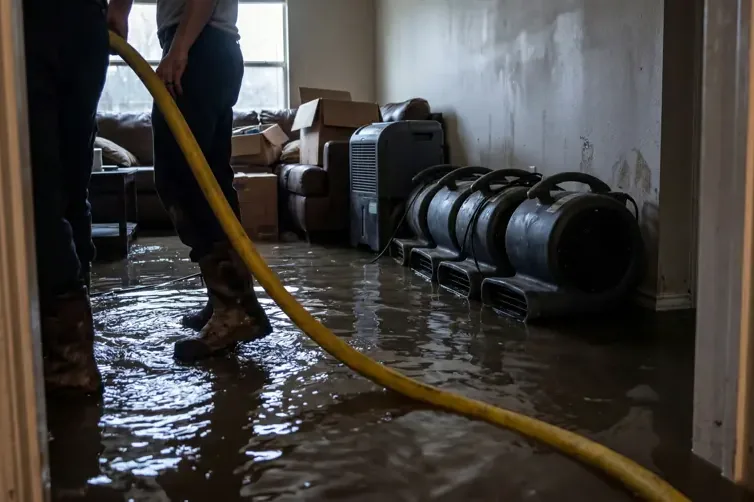
First steps for storm runoff and flood cleanup, before the crew arrives
- 1
Stay out of deep water
Do not wade into water near outlets, cords or the panel.
- 2
Shut off power
Switch off breakers to flooded areas only if the panel is dry.
- 3
Keep contact short
Wear boots and gloves; flood water carries bacteria and debris.
- 4
Photograph the waterline
Record the high-water mark on walls before any cleanup.
How storm runoff and flood cleanup is handled, start to dry
The tech who does the walkthrough maps moisture before any equipment goes down, so the drying plan matches what is actually wet. Equipment stays until the readings say dry, not until it looks dry.
- 1
Protect
PPE on, power checked and the water category set.
- 2
Remove
Water extracted, mud and soaked materials taken out.
- 3
Treat
Surfaces cleaned and treated with an antimicrobial.
- 4
Dry
Air movers and LGR dehumidifiers until readings say dry.
What does storm runoff and flood cleanup cost in Camas, WA?
Storm runoff and flood cleanup usually runs $3,000 to $8,000 for a crawl space or one lower room, $8,000 to $20,000 for a flooded lower level, and more when several levels or a business are involved.
Crawl space or one room
$3,000 to $8,000
- Extraction and mud-out
- Insulation removed
- Antimicrobial treatment
Lower level flooded
$8,000 to $20,000
- Drywall cut above waterline
- Flooring removed
- Structural drying
Several levels
$20,000 to $40,000+
- Large-scale removal
- Desiccant drying
- Rebuild scoped separately
Ranges are typical, not a quote: the category of water, the square footage, the material class and how fast drying started move the number most. Run the water damage cost calculator for a closer planning range.
Water that comes in from outside is never clean. Runoff carries soil, fertilizer, oil and sewage from the ground it crossed, so the flood cleanup crew handles it as Category 3 from the start. That means PPE, removal of porous materials it touched, cleaning and antimicrobial treatment before drying.
How storm water gets in here
Long wet seasons leave the ground saturated, and then a heavy storm has nowhere to go but downhill. In February 1996, Clark County was one of 24 Washington counties hit when warm rain fell on frozen, saturated ground, and the National Weather Service flood history for Washington records November 2006 as the wettest November on record.
- Runoff that flows into a crawl space through vents or low spots
- Water that comes up through a lower floor or slab edge
- Creek water near Lacamas Creek and low ground by the lakes
- Clogged yard drains that send water against the foundation
Storm water in the house? The flood cleanup crew runs 24/7.
What the flood cleanup includes
Extraction comes first, then mud-out. Carpet, pad, insulation and drywall that the water reached are removed above the waterline. Hard surfaces are cleaned and treated with an EPA-registered antimicrobial at the label dwell time, then the drying team sets air movers and LGR dehumidifiers.
Flood coverage is separate
Most homeowner policies do not cover rising water from outside. That falls under flood insurance. The FEMA flood maps show the flood zone for any address, and your insurer decides what your own policy covers.
Where the storm runoff and flood cleanup crews work
The restoration crews cover ZIP 98607, from Downtown and the mill waterfront up to Prune Hill, Grass Valley, Fern Prairie and the homes around Lacamas Lake and Round Lake.
Nearby coverage reaches Washougal, Vancouver, Fairview, Troutdale, Gresham.
Related water damage services nearby
Storm Runoff and Flood Cleanup questions in Camas, WA
Short answers about storm runoff and flood cleanup, from the first hour to the last reading.
Is storm runoff in the house really Category 3?
Yes. Water that crossed the ground outside carries soil, chemicals and often sewage. The IICRC S500 standard treats it as Category 3, which is why porous materials it touched are removed.
Does homeowners insurance cover flood water?
Usually not. Rising water from outside falls under flood insurance, while a sudden pipe failure inside falls under the homeowner policy. Your insurer decides under your own coverage.
What has to be thrown out after a flood?
Carpet, pad, insulation and drywall that the flood water reached are removed, along with soft goods that cannot be cleaned. Hard furniture and solid wood can often be cleaned and dried.
How long does flood cleanup take?
Extraction and mud-out happen first, then drying runs 4 to 8 days for most losses. Larger floods and dense materials take longer, and readings decide when equipment leaves.
Can sandbags keep storm water out of the house?
They help with shallow runoff. When heavy rain is forecast, the city makes sand and sandbags available to residents at its Operations Center.
What does storm and flood cleanup cost?
Cost depends on how much of the house the water reached, how much has to be removed and the days of drying. A crawl space sits at the low end of the ranges above.
Still dealing with it?
Get flood water out of the lower floorFlood water left in place soaks deeper every hour.
The cleanup crew removes the water and what it soaked, treats the surfaces and dries the structure.