Sewage Backup Cleanup in Camas, WA
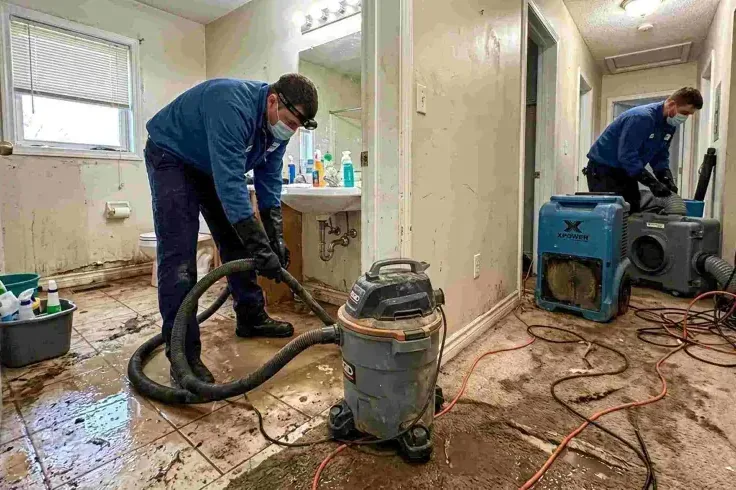
Sewage that backs up through a toilet, tub or floor drain is Category 3 water from the start. The response team wears PPE, removes porous materials above the waterline, treats every surface and dries the room.
(888) 509-1696 Sewage coming up a drain? Keep clear and call- Category 3 PPE protocols
- EPA-registered antimicrobial
- 24/7 dispatch
First steps for sewage backup cleanup, before the crew arrives
- 1
Stop using water
Do not flush, run sinks, shower or start the washer.
- 2
Keep everyone out
Close off the area from children, pets and anyone sick.
- 3
Shut off power nearby
Switch off circuits in the wet area if the panel is dry.
- 4
Photograph from the doorway
Record the backup without walking through it.
How sewage backup cleanup is handled, start to dry
The tech who does the walkthrough maps moisture before any equipment goes down, so the drying plan matches what is actually wet. Equipment stays until the readings say dry, not until it looks dry.
- 1
Contain
PPE on, the area sealed off and air movement controlled.
- 2
Remove
Sewage extracted and porous materials taken out.
- 3
Treat
Surfaces cleaned and treated at the label dwell time.
- 4
Dry
Air movers and LGR dehumidifiers until readings say dry.
What does sewage backup cleanup cost in Camas, WA?
Sewage backup cleanup usually runs $2,000 to $5,000 for one bathroom or a small area, $5,000 to $12,000 when sewage reached carpet, walls or a lower floor, and more when it spread under the house.
One bathroom
$2,000 to $5,000
- Category 3 extraction
- Flooring and base removed
- Antimicrobial treatment
Room or lower floor
$5,000 to $12,000
- Carpet and pad out
- Drywall cut above waterline
- Structural drying
Crawl space reached
$12,000 to $20,000+
- Under-house cleanup
- Insulation removed
- Rebuild scoped separately
Ranges are typical, not a quote: the category of water, the square footage, the material class and how fast drying started move the number most. Run the water damage cost calculator for a closer planning range.
Sewage carries bacteria, viruses and parasites, so it is never dried in place. The IICRC S500 standard treats it as Category 3 water from the first minute. Carpet, pad, insulation and drywall it touched are removed above the waterline, hard surfaces are cleaned and treated with an EPA-registered antimicrobial at the label dwell time, and only then does drying start.
Why sewage backs up
Most backups start in the sewer lateral, the private pipe between the house and the main.
- Roots that grow into joints in older laterals
- Grease and wipes that build a clog over time
- A sagging or broken lateral pipe
- Heavy rain that overloads lines in a storm
Sewage backing up? The response team handles it 24/7.
What the cleanup includes
The crew contains the area, extracts the sewage, removes porous materials, cleans and treats every surface, and dries the room with air movers and LGR dehumidifiers. Moisture readings and photos go into the file. After a backup, a plumber should camera the lateral before the line is used heavily again. For general flood and sewage safety, the Ready.gov flood page lists the basics.
Keeping people safe
Keep children and pets away, do not run water or flush anything, and do not try to mop sewage with household cleaners. If the backup is part of a larger claim, the Washington Office of the Insurance Commissioner explains sewer backup endorsements and what to ask an insurer.
Where the sewage backup cleanup crews work
The restoration crews cover ZIP 98607, from Downtown and the mill waterfront up to Prune Hill, Grass Valley, Fern Prairie and the homes around Lacamas Lake and Round Lake.
Nearby coverage reaches Washougal, Vancouver, Fairview, Troutdale, Gresham.
Related water damage services nearby
Sewage Backup Cleanup questions in Camas, WA
Short answers about sewage backup cleanup, from the first hour to the last reading.
Is it safe to clean up a sewage backup myself?
Not safely. Sewage is Category 3 water with bacteria and viruses. Crews use full PPE, remove porous materials and treat surfaces with an EPA-registered antimicrobial.
What has to be thrown out after a sewage backup?
Carpet, pad, insulation, drywall above the waterline and soft goods it touched are removed. Hard, non-porous items can usually be cleaned and disinfected.
Why does sewage keep backing up into my house?
Usually a problem in the private sewer lateral: roots, grease, wipes or a broken pipe. A plumber can camera the line to find the cause after cleanup.
Does insurance cover a sewage backup?
Many policies exclude it unless a sewer backup endorsement was added. Your insurer decides under your own policy, so check for that endorsement.
How long does sewage cleanup take?
Removal and treatment take a day or two, then drying runs 3 to 6 days for most losses. Readings decide when equipment comes out.
Can the room be used during sewage cleanup?
No. The area stays closed until removal, treatment and drying are done and the surfaces are clean.
Still dealing with it?
Report the backed-up drainSewage is never left to dry in place.
The response team removes what it touched, treats every surface and dries the room to the readings.