Camas sits among lakes and creeks, and that water picture explains a lot about what happens beneath a home when the autumn rain returns.
Key takeaways
- Lacamas Creek collects runoff from mostly open fields and farm land around the lakes.
- Rain on saturated ground has little place to go, and a raised floor is a low spot that can collect it.
- First Street rates the city at minor flood risk overall, with 146 properties, or 1.4 percent, at risk over the next 30 years.
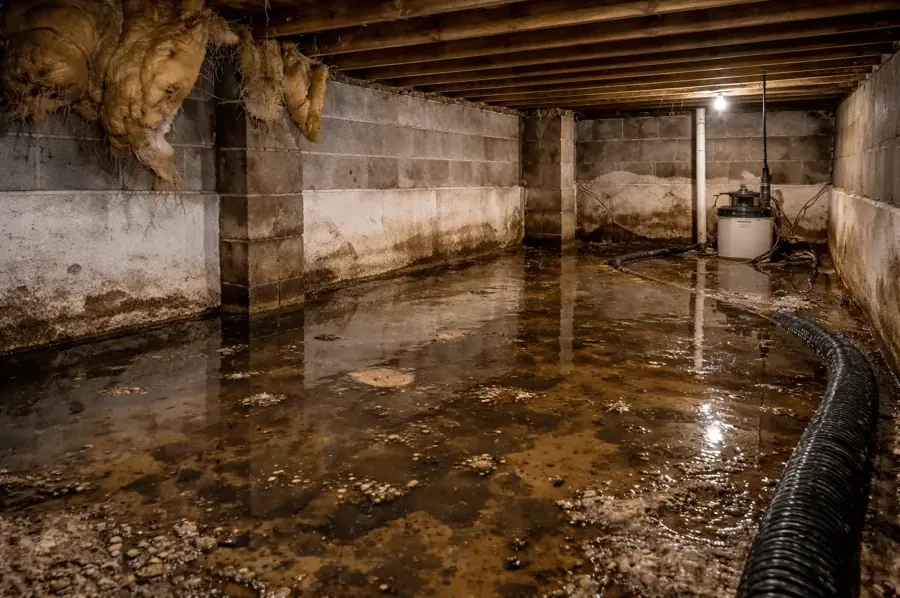
- Standing water under a floor needs pumping, wet insulation removal and drying of the joists.
- Runoff water is treated as contaminated, so protective gear and careful removal apply.
The local water picture
Camas is a city of lakes and streams. Lacamas Lake, Round Lake, Fallen Leaf Lake and Tug Lake sit in and around it, and the Washougal and Columbia rivers run along its edges.
Lacamas Creek collects runoff from mostly open fields and farm land around the lakes. The Lacamas Lake Dam, built in 1883 at the south end of Round Lake, is part of the same system.
In the 1990s many high tech plants and expensive housing developments appeared around Lacamas Lake. New roofs, driveways and yards changed how rain moves across the land, which is one reason runoff is worth understanding.
How serious is the flood risk?
The numbers are modest, and they are worth stating plainly. First Street rates the city at minor flood risk overall, with 146 properties, or 1.4 percent, at risk of flooding over the next 30 years.
That is a low share, but it still leaves real homes in the group, and a wet crawl space does not need a river flood to happen. Heavy rain on saturated ground is enough.
November 2006 was the wettest November on record in Washington, with 4 to 10 inches of rain in the western lowlands. Months like that test every drain and foundation.
How runoff reaches the space under a floor
Water takes the path of least resistance. When the ground is already full from days of rain, more rain stays on the surface and runs downhill toward low points.
Saturated ground
Frozen or saturated ground sends rain to runoff instead of soaking in. That was part of the pattern in the February 1996 flood, when Clark County was one of 24 Washington counties affected.
Water seeking a low spot
A crawl space is often lower than the yard around it. Water can seep through foundation vents, along the footing or through gaps where pipes enter, and it settles on the dirt or vapor barrier.
- Foundation vents that sit below the soil line.
- Downspouts that empty beside the wall.
- Soil that slopes toward the house.
- Gaps around pipe and wire penetrations.
Signs of water under the floor
Crawl space water is easy to miss because nobody looks there. The house itself usually gives hints first.
A crawl space is a tight, wet and sometimes electrical space. Nobody should crawl into standing water where wiring, a furnace or a water heater sits close by.
A flashlight at the access hatch tells most of the story. If water is visible, or if insulation is soaked and drooping, the next call is to a restoration team, not a trip under the house.
- Floors that feel cold, soft or bouncy over one area.
- A musty smell that appears after rain.
- Ductwork sagging or wet insulation hanging down from the floor above.
- Standing water seen through the access hatch with a flashlight.
- A sump pump, if one exists, that runs without stopping.
Pumping, removal and drying
Once standing water is confirmed, the work follows a clear order. A crawl space water removal job begins with pumping, because water that sits keeps soaking upward into joists and subfloor.
Wet fiberglass insulation holds water like a sponge and often pulls loose. It comes out, along with a torn or soaked vapor barrier.
- Pump the standing water out through a hose to a safe discharge point.
- Remove wet insulation and ruined vapor barrier.
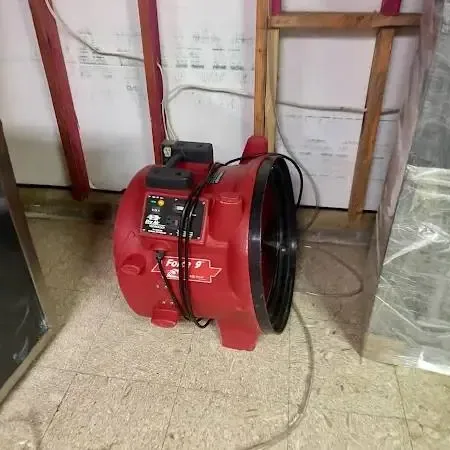
- Dry joists and subfloor with fans and dehumidifiers.
- Check moisture readings in the floor above, not just in the crawl space.
- Replace the vapor barrier once the structure reads dry.
What happens to the floor above
A crawl space is the underside of the living space. Water below a floor keeps moving up through vapor, even when the floor surface looks fine.
Wood floors can cup, laminate can swell at the seams, and the subfloor can hold moisture for a long time. Moisture meters and thermal imaging check the floor from above and below.
Drying the structure is as important as pumping the water. The goal is for the joists, subfloor and flooring to read normal before anything is closed back up.
Why runoff is handled as contaminated water
Runoff crosses yards, driveways and farm land before it reaches a foundation. It can carry soil, fertilizer, animal waste and debris.
For that reason, a storm and flood cleanup treats the water as contaminated. Crews wear protective gear, bag affected insulation and disinfect surfaces that stay in place.
That is different from a clean supply pipe leak, where drying can often begin right away without the same handling.
Clean water versus contaminated water under a floor
Not every wet crawl space is a runoff problem, and the water damage cost calculator shows how the range shifts with the source. A supply pipe that splits under the floor puts clean water on the ground, and that water can often be handled with a lighter touch.
The difference matters for cost and for safety. The restoration team looks at where the water came from before choosing equipment, protective gear and disposal steps.
- Clean source: a failed supply pipe, a water heater or an appliance drain.
- Gray source: a washing machine or dishwasher discharge.
- Contaminated source: runoff, creek water or sewage reaching the crawl space.
- A mixed source is handled as contaminated until proven otherwise.
Why the source is checked first
The first question on a wet crawl space call is where the water entered. If the answer is runoff, the cleanup includes removal of porous materials that touched the water.
If the answer is a pipe, drying in place is more likely.
Preparing before the next heavy rain
When heavy rain is forecast, the city makes sand and sandbags available to residents at its Operations Center. Sandbags help keep surface water away from doors and low openings, though they do not seal a foundation.
Clearing gutters, pointing downspouts away from the house and keeping vents free of debris all reduce the load on the ground beside the wall.
After a storm, a quick look into the access hatch can catch a problem before it spreads. Small fixes outside the house cost far less than a repair inside it.
Gutters that overflow dump water right at the foundation. Cleaning them before the first big autumn storm is one of the simplest ways to cut the load on the soil next to the wall.
Questions
Does Lacamas Creek flood homes in Camas?
The creek collects runoff from mostly open fields and farm land around the lakes. First Street rates the city at minor flood risk overall, though heavy rain on saturated ground can still put water under a floor.
What is the Lacamas Lake Dam?
It was built in 1883 at the south end of Round Lake. The city draws the lake down each fall to inspect it.
Is runoff water in a crawl space safe to handle?
It is treated as contaminated, so protective gear is used and wet insulation is bagged and removed.
Where can residents get sandbags?
When heavy rain is forecast, the city makes sand and sandbags available to residents at its Operations Center.
How is a wet crawl space dried?
Standing water is pumped out, wet insulation and the soaked vapor barrier are removed, and joists and subfloor are dried with fans and dehumidifiers until readings are normal.