Crawl Space Water Removal in Vancouver, WA
Water under a floor soaks the joists and subfloor while it sits out of sight. The extraction crew pumps the space dry and dries the framing above it with careful monitoring.
(888) 509-1696 Pump out the space under the floor- Standing water pumped
- Joist and subfloor drying
- Moisture monitoring
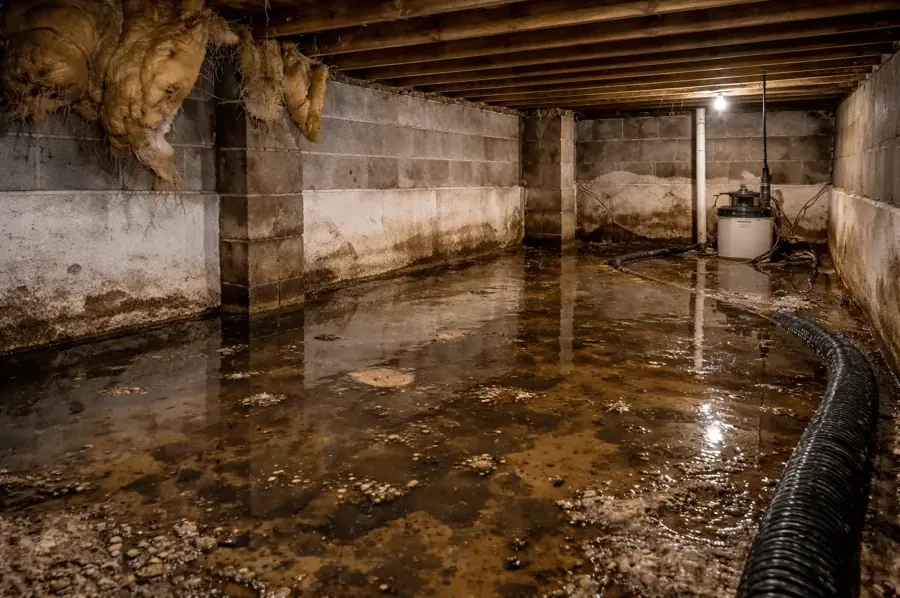
First steps for crawl space water removal, before the crew arrives
- 1
Find the source
Check whether a pipe, drain or runoff put the water there.
- 2
Stay out of the space
Do not enter standing water, which can hide hazards.
- 3
Photograph from the hatch
Capture the water level and any wet insulation from the access.
- 4
Call the extraction crew
Phone the team to pump the space and dry the framing above.
How crawl space water removal is handled, start to dry
The tech who does the walkthrough maps moisture before any equipment goes down, so the drying plan matches what is actually wet. Equipment stays until the readings say dry, not until it looks dry.
- 1
Pump
Standing water is pumped out through long hoses.
- 2
Clear
Wet insulation and debris are bagged and removed.
- 3
Dry
Fans and dehumidifiers dry the framing above.
- 4
Check
Readings confirm dry joists and a dry subfloor.
What does crawl space water removal cost in Vancouver, WA?
Clean water caught early in a crawl space usually costs $1,500 to $4,000 to remove and dry. A whole crawl space runs $4,000 to $9,000, and sewage or flood water can reach $16,000.
Clean water, caught early
$1,500 to $4,000
- Pump out
- Insulation check
- Fans placed
Whole crawl space
$4,000 to $9,000
- Full space dried
- Insulation removal
- Joist readings
Sewage or flood water
$9,000 to $16,000+
- Contaminated removal
- Sanitizing
- Longer drying
Ranges are typical, not a quote: the category of water, the square footage, the material class and how fast drying started move the number most. Run the water damage cost calculator for a closer planning range.
Standing water in a crawl space is removed and dried the same way anywhere, and this work applies to any Vancouver home that has such a space. The wettest months are December, November and January, when rain and runoff can reach low areas under a building. The main crawl space service outlines the standard approach.
Why the space matters
Water under the floor wets the joists, the subfloor and any insulation, and moist air can rise into the living space. Left alone, the damp encourages mold and rot.
Water sitting under the floor keeps soaking the framing, so dry it soon.
How the water is removed
- Pumps clear standing water
- Wet insulation is pulled and bagged
- Fans and dehumidifiers dry the space
- Readings track the joists and subfloor
Clean water or something worse
Water from a supply pipe is treated differently than sewage or storm runoff. When a drain is involved, the sewage backup steps apply to the crawl space too.
Warning signs of water below
Musty odors, soft or cold spots in the floor, a sudden rise in humidity indoors and pooled water near the access hatch can all point to trouble under the house. A moisture meter on the floor above can confirm whether the framing has taken on water.
Plastic sheeting and insulation under the floor can be soaked or displaced by water. The crew checks both, removes what is ruined and leaves the space ready for the owner's contractor to restore.
Where the crawl space water removal crews work
Crawl space work runs across Vancouver, including older neighborhoods like Arnada and the Orchards area, with ZIP codes 98660 to 98666 and Hazel Dell to the north.
The same service nearby: crawl space water removal in Camas, Fairview, Gresham.
Every water damage service in this town · every town covered
Related water damage services in Vancouver
Crawl Space Water Removal questions in Vancouver, WA
Short answers about crawl space water removal, from the first hour to the last reading.
Is water in the crawl space an emergency?
It should be treated as urgent, since moisture rises into floors and insulation and encourages mold in a day or two.
How does water get under the floor?
Common causes are a leaking pipe, a failed drain, runoff after heavy rain or a plumbing backup.
Does the insulation need to be replaced?
Wet insulation sags and holds moisture against the floor, so it is usually removed and replaced after drying.
Is it safe to go under the house?
Standing water, loose wires and tight spaces create hazards. Leave entry to trained crews with protective gear.
Will the floor above feel damp?
Sometimes. Soft or cupped flooring above a wet crawl space is a sign that moisture has moved up.
Can this be prevented?
A plumber or contractor can address leaks, drainage and vapor control. The drying team handles the water that is already there.
What if the water keeps coming back?
Recurring water points to a leak or drainage problem that needs a plumber or contractor. Drying only works once the source is controlled.
Still dealing with it?
Report the crawl space waterGet the space under the floor dried
Share how deep the water is, where it came from and how long it has been there, and the extraction crew will plan the pump out.