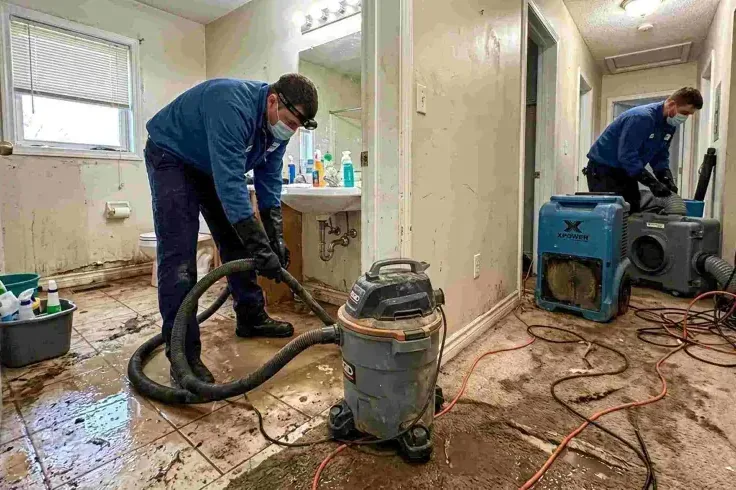
A sewer backup is one of the worst surprises a household can face. In Fairview, Oregon, understanding who runs the pipes helps the response go faster.
Key takeaways
- The city provides water, wastewater and stormwater service directly.
- Sewage from here, Gresham and Wood Village goes to the Gresham wastewater treatment plant.
- Rules written for the City of Portland do not govern the pipes here.
- Sewage backup water is contaminated and should not be handled by the household.
- Cleanup removes porous materials that touched the water, then disinfects and dries the area.
Who handles sewage in Fairview
The city sits in Multnomah County, Oregon, in the Portland metropolitan area, and 10,424 residents lived there at the 2020 census. The city provides water, wastewater and stormwater service directly.
Its Public Works Department covers water treatment and distribution, sanitary sewer collection, storm water, streets and parks. The Wastewater Division handles the sewer side.
Electricity, natural gas and telephone service come from other companies, not the city. A backup that involves the city sewer is a question for Public Works, while the home's own plumbing is the owner's side.
A small area of the city, in Sub-District 3 on the utility boundary map, gets water from Rockwood Water People's Utility District. Water service and sewer service are therefore not always from the same provider, and a call about a problem should start with the right office.
Where the sewage goes
The Gresham wastewater treatment plant serves Gresham, Fairview and Wood Village. It treats an average of 12 million gallons a day, and the treated water is discharged to the Columbia River.
Why Portland's sewer rules are not the rule here
Search results about sewer backups in the area often point to rules written for the City of Portland. Those rules belong to Portland.
The city here runs its own system, so questions about the pipe in the street go to Public Works.
What a sewer backup looks like
A backup rarely starts as a flood. It begins with small signs that something downstream is blocked.
- Gurgling from a toilet or tub when another fixture drains.
- Water coming up in a floor drain, shower or lowest tub.
- More than one fixture draining slowly at the same time.
- A sewer smell near a drain or in a basement or utility room.
- Dirty water on the floor after a heavy use of water, such as a laundry load.
Why sewage water is an emergency of its own
Sewage is contaminated water. It can carry bacteria and viruses, and it should never be treated as an ordinary spill.
The danger is not only the smell. Anything porous that touches sewage, such as carpet, pad, drywall, insulation and cabinet backs, can hold contamination deep inside.
That is why sewage cleanup differs from a clean pipe leak. Materials that can be cleaned in place after a supply pipe leak may need to be removed after a sewer backup.
- Keep children, older adults and pets out of the area.
- Do not wade through sewage water without protective gear.
- Do not run the washer, dishwasher or showers while the drain is backing up.
- Do not mix household cleaners in a closed space.
Steps for a household when the drain backs up
The first goal is to stop making it worse and to find out where the blockage sits. The answer decides who has to act.
Time matters even though no clock number applies. Sewage that sits on carpet or drywall keeps soaking in, and the contamination goes deeper the longer it stays.
Someone in the household should write down what happened: which fixtures backed up, what time it was noticed, what was running and who was called. Those notes help the city, the plumber and the insurer.
- Stop using water in the house.
- Check whether neighbors have the same problem, which points to the city main.
- Call Public Works about the sewer side, and a plumber about the home's own pipe.
- Take photos of the water, the drain and affected belongings before anything moves.
- Call a restoration team for extraction before the water soaks into floors and walls.
Main or home pipe
A blockage in the city main can send water back into several homes. A blockage in the home's own pipe affects one household.
The difference shapes the repair, but the cleanup starts the same way.
What the household can and cannot do
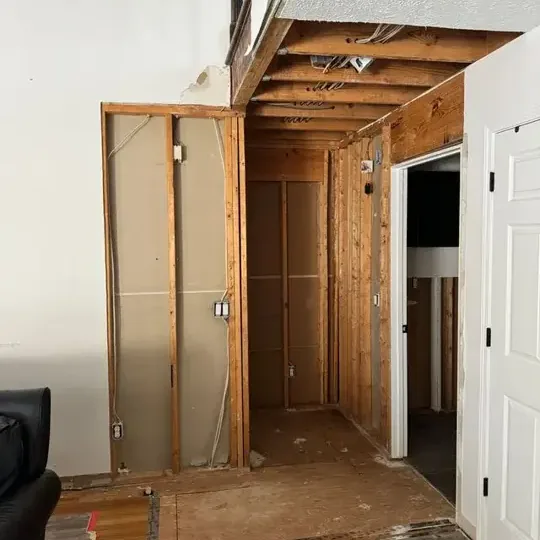
A homeowner can reduce the spread of contamination, but the real cleanup is a job for trained people with the right gear. Mops and towels move sewage around without making a surface safe.
Cleaning products are no substitute for removal. Porous materials that soaked up contaminated water usually cannot be made safe in place.
- Safe: stopping water use, moving belongings to dry areas, taking photos.
- Safe: opening a window if the room is ventilated to the outside and no one is exposed.
- Not safe: scooping out sewage barehanded or running a household vacuum on it.
- Not safe: leaving wet carpet and pad in place to dry.
How a sewage backup cleanup works
A sewage backup cleanup starts with protective gear and containment. The response team keeps contaminated water from spreading to clean rooms.
Next comes water extraction. Pumps and wet vacuums remove standing water, then the work moves to the materials that touched it.
Porous materials go out first. After that, hard surfaces are cleaned and disinfected, and the area is dried with air movers and dehumidifiers.
Belongings are sorted too. Hard goods can often be cleaned, while soft goods such as upholstered furniture, stuffed toys and cardboard boxes that sat in the water are usually discarded.
- Containment and protective gear.
- Extraction of contaminated water.
- Removal of porous materials that cannot be cleaned.
- Cleaning and disinfecting of hard surfaces.
- Drying and moisture readings until normal.
Storm water, the lake and the larger system
Backups and storm water are different systems, but they share the same landscape. Most storm water and surface water that leaves the city drains to Fairview Lake.
The lake drains to the Columbia Slough, which flows to the Willamette River.
Much of the water entering the lake is stormwater drainage from the city and Gresham. The storm water program follows water quality rules set by the Oregon Department of Environmental Quality, and a 2022 Storm Water Management Plan is on file.
None of that confirms a flood problem in any neighborhood. It only shows how rain moves through the area.
When a heavy storm leaves water in a home, the same contaminated water handling applies.
Records help in every case. A rough cost calculator shows the range a cleanup can reach.
The date of the backup, the photos, the call to Public Works and the plumber's findings all support an insurance claim.
Questions
Who runs the sewer here?
The city provides water, wastewater and stormwater service directly. Its Public Works Department has a Wastewater Division.
Where does the sewage go?
It goes to the Gresham wastewater treatment plant, which serves Gresham, Fairview and Wood Village and treats an average of 12 million gallons a day.
Do Portland sewer backup rules apply here?
No. Those rules belong to the City of Portland. The city runs its own system.
Is sewage backup water dangerous?
Yes. It is contaminated water, so protective gear is used and porous materials that touched it are often removed.
What should be done first when a drain backs up?
Stop using water, keep people and pets out, take photos, call the right party about the pipe and call a restoration team for extraction.