Water Extraction in Fairview, OR
When water is standing on the floor, extraction comes first. The response team pumps out the bulk of it and then maps what the carpet, pad and walls absorbed.
(888) 509-1696 Get standing water pumped out- Pumps and extraction wands
- Carpet, pad and hard floors
- Moisture check afterward
First steps for water extraction and removal, before the crew arrives
- 1
Stop the source
Close the supply valve or isolate the failed fixture so no new water joins the puddle.
- 2
Pump and extract
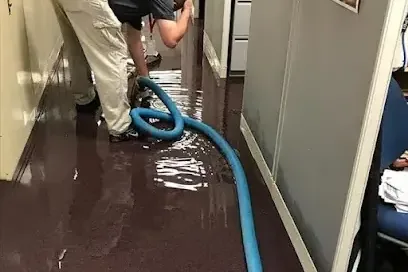
Pumps and wands take down standing water, then extraction tools work the carpet, pad and floor seams.
- 3
Check what soaked
Meters and a thermal camera show water that moved into wall bottoms, subfloor or the room next door.
- 4
Hand off to drying
Air movers and dehumidifiers take over, with readings logged until the materials are dry.
How water extraction and removal is handled, start to dry
The tech who does the walkthrough maps moisture before any equipment goes down, so the drying plan matches what is actually wet. Equipment stays until the readings say dry, not until it looks dry.
- 1
Locate
The crew traces the source and confirms the supply is stopped.
- 2
Extract
Pumps and wands remove standing water from every affected surface.
- 3
Measure
Meters show how far moisture traveled into materials.
- 4
Dry
Equipment stays until readings match dry reference materials.
What does water extraction and removal cost in Fairview, WA?
Extraction usually runs $500 to $1,500 for one room of clean water, $1,500 to $4,000 for several rooms and $3,000 to $8,000 when a crawl space or Category 3 water is involved. Size, water type and flooring decide where a job lands.
One room, clean water
$500 to $1,500
- Pump out and wand work
- Carpet and pad lift
- Basic moisture check
Several rooms
$1,500 to $4,000
- Multiple room extraction
- Moisture mapping
- Drying setup
Crawl space or Category 3
$3,000 to $8,000
- Contaminated water handling
- Heavy duty pumping
- Sanitizing wipe down
Ranges are typical, not a quote: the category of water, the square footage, the material class and how fast drying started move the number most. Run the water damage cost calculator for a closer planning range.
A flooded room in a Fairview home rarely stays a one room problem. Water follows the lowest path under trim, through doorways and into wall bottoms, so extraction is aimed at the places water has already traveled, not only at the visible puddle. Clean water also turns into gray water the longer it sits, which changes how the cleanup is done. That is why the crew checks the baseboards and adjoining rooms before calling the floor finished.
Find the source, then pump
Extraction starts with finding where the water came from. Most homes in town are served by the city water system, so shutting off the supply at the home is the first step for a pressurized leak. Once the source is stopped, pumps and wands go to work on standing water, and a truck mounted unit handles larger volumes. For a rough budget, the cost calculator turns room size into a range.
Standing water keeps soaking into floors and walls until it is pumped out.
What gets removed
Extraction targets whatever is holding water:
- Standing water across tile, vinyl and wood floors
- Water trapped in carpet and the pad beneath it
- Pooled water in low corners and under cabinets
- Water wicking up wall bottoms behind baseboards
Why drying follows extraction
Pumping removes the bulk, but the materials still hold moisture that no wand can reach. After extraction the crew takes readings on walls, subfloor and framing, sets air movers and dehumidifiers where the readings are highest, and documents the progress. Skipping that step is how a cleaned up room ends up with warped boards and musty drywall a few weeks later. The ongoing work is covered under structural drying.
Where the water extraction and removal crews work
Extraction work covers homes near Fairview Lake, the condos above shops in the Village and streets across the 97024 ZIP code, from Interlachen to the Salish Ponds.
The same service nearby: water extraction and removal in Camas, Troutdale, Gresham.
Every water damage service in this town · every town covered
Related water damage services in Fairview
Water Extraction and Removal questions in Fairview, WA
Short answers about water extraction and removal, from the first hour to the last reading.
How is extraction different from drying?
Extraction physically removes liquid water with pumps and wands. Drying then pulls moisture out of materials using air movers and dehumidifiers. Both are needed, and skipping the second leaves hidden dampness behind walls and floors.
Can carpet be saved after a flood?
Clean water caught early often allows the carpet to stay, with the pad replaced if needed. Gray or sewage water usually means carpet and pad are removed because they cannot be made safe again.
Why does the crew check walls if only the floor is wet?
Water wicks upward into drywall and baseboards and travels sideways under flooring and behind cabinets. Meters and thermal imaging show the real footprint so nothing wet is sealed inside.
What if the leak is still running?
The supply has to be stopped first. For a pressurized leak that means closing the shutoff valve at the home, since most local homes are on the city water system, and then the pumping can begin.
Does clean water stay clean?
Not for long. Standing clean water picks up dirt, bacteria and building materials as it sits, which can turn it into gray water and change the cleanup steps.
Do renters handle extraction themselves?
Tenants should report the leak to the landlord and photograph the water, then the property owner arranges the work. With nearly half of occupied units rented in 2020, this comes up often.
Still dealing with it?
Tell a pro which rooms are wetWater on the floor needs to come out before it reaches the walls
The restoration team can talk through the situation, explain what extraction involves and set up pumping and drying that fit the damage.