Troutdale sits where the Columbia River Gorge opens toward Portland, and that location brings wind. When the wind carries rain, roofs get tested from the side.
Key takeaways
- Troutdale is known for some of the windiest conditions in the Pacific Northwest, with strong east winds out of the Gorge.
- Wind driven rain can enter at shingle edges, flashing, vents and ridges that stay dry in a calm storm.
- A roof leak soaks attic insulation first, then the ceiling below, often away from the point where water entered.
- Quick steps from inside the house reduce damage, and nobody should climb on a wet roof.
- Cleanup removes wet insulation, relieves sagging drywall and dries the joist bays.
The windy end of the Gorge
The city is in Multnomah County, Oregon, with 16,300 residents at the 2020 census. It is the western gateway to the Historic Columbia River Highway, the Mount Hood Scenic Byway and the Columbia River Gorge.
The city sits at the confluence of the Sandy and Columbia rivers. It is also known for some of the windiest conditions in the Pacific Northwest, with strong east winds out of the Columbia River Gorge.
Wind is part of the local identity. Several local businesses use East Wind in their names because of those Gorge winds.
How wind driven rain finds a way in
Most roofs are designed to shed rain falling straight down. Wind changes the angle.
Rain driven sideways or upward can slip under shingle edges, behind flashing and around anything that pokes through the roof.
A wind storm can also strip a roof of more than shingles. Branches strike the surface, debris lands on flashing, and gutters fill and spill water behind the fascia.
- Shingles lifted or creased by gusts.
- Flashing at chimneys, walls and skylights that has loosened.
- Plumbing and exhaust vents with worn seals.
- Ridge caps that have shifted.
- Gutters pulled away from the fascia so water runs behind them.
Why the leak seems far from the hole
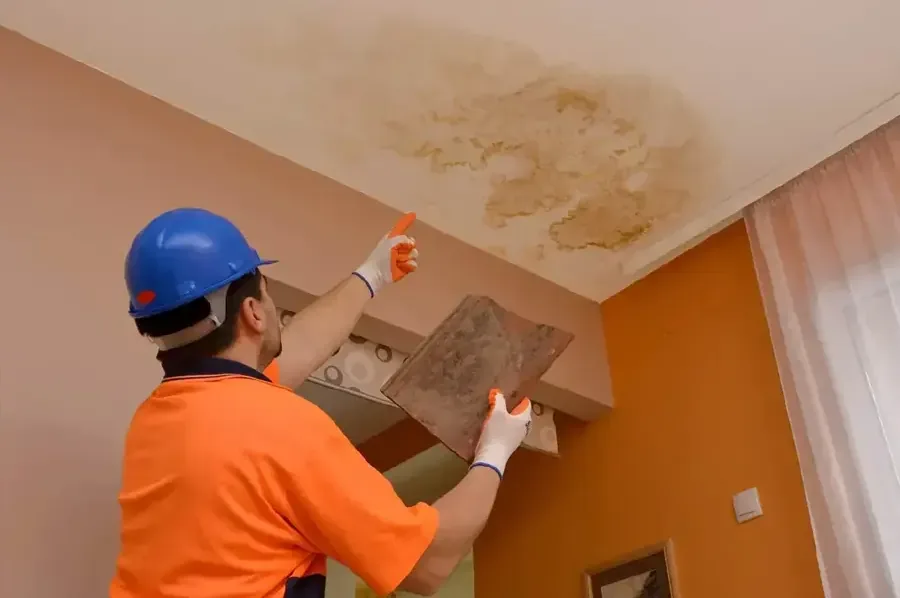
Water that enters a roof often runs along the deck or a rafter before it drips. A ceiling stain may appear several feet from the real opening, which makes the source hard to guess.
Where the water goes: attic to ceiling
The first thing wet is the attic insulation. Insulation soaks up water and holds it against the drywall below, so a small leak can become a large wet area.
After that, the ceiling takes over. Paint bubbles, a stain spreads, then drywall sags between the joists as it fills with water.
If the leak is near an exterior wall, water can run down inside the wall cavity and reach the baseboard and floor.
Many ceilings have no visible stain until the damage is well along. Insulation hides the water, and drywall can look fine while a joist bay above it is full.
A moisture meter or a thermal image reads through paint and finds the wet area. That is why a check after a windy storm is worth the effort even when nothing looks wrong.
- Stains that grow after each rain.
- Bubbling or peeling paint on the ceiling.
- A sagging ceiling that feels heavy.
- Drips at light fixtures or smoke alarms.
- A damp smell in a closet or upstairs room.
What to do during and right after a storm
Safety comes first. A wet, windy roof is dangerous, and no one should climb up to inspect or tarp it during a storm.
From inside, a few actions limit the damage while the storm passes.
- Move furniture and belongings away from the wet area.
- Place buckets under drips and cover floors with plastic.
- If the ceiling bulges with water, a small hole at the lowest point lets it drain into a bucket in a controlled way.
- Turn off lights and ceiling fans below a wet ceiling.
- Photograph the stains, the drips and the attic if it can be reached safely.
Working with the roofer and the insurer
A roof leak is two jobs that need to be coordinated. A roofer closes the opening, and a restoration team dries the inside.
Order matters. If the roof is not fixed first, the next rain will wet the dried structure again.
- Photograph the roof damage from the ground and the interior stains.
- Ask the roofer for a written note of what was repaired.
- Keep a log of the drying, with readings and dates.
- Share both records with the insurer.
How the cleanup works
A roof leak water damage response starts with an inspection of the attic and the ceiling. The mitigation team looks for wet insulation, damp framing and the path the water took.
Wet insulation is removed because it will not dry quickly and it keeps feeding moisture into the ceiling. Sagging drywall is opened so the joist bays can be dried.
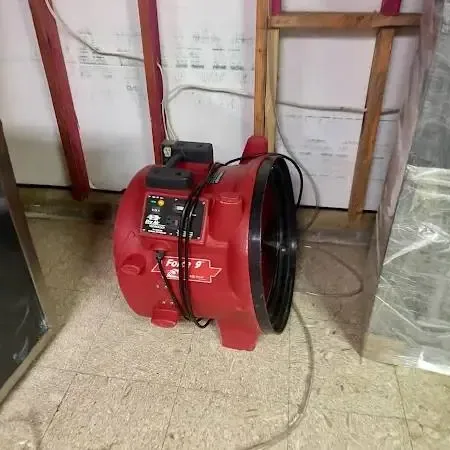
A ceiling leak water damage cleanup then dries the ceiling and the framing with air movers and dehumidifiers. Moisture readings show when the structure is back to normal.
Wet attic insulation is bagged and carried out, not left to dry in place, since it holds water against the ceiling below. New insulation goes in after the framing reads dry.
- Inspect the attic and ceiling for the water path.
- Remove wet insulation and ruined drywall.
- Dry the framing and the remaining ceiling.
- Confirm dry readings before repairs close the area.
What the local weather record shows
The wind is not an occasional event. The National Weather Service issued an ice storm warning for the Portland metro area from 10 a.m. January 16, 2024 to 4 a.m. the next day, naming Troutdale among the affected cities.
That warning called for ice accumulation of two tenths to one half of an inch and east wind gusts up to 50 mph, strongest first in the Columbia River Gorge. A winter storm on January 13, 2024 had already left more than 150,000 Portland General Electric customers without power.
Local sales data shows detached homes sold in 2024 and 2025 had a median build year of 1992 in 2024 and 1990 in 2025. Roofs of any age can develop weak spots in repeated wind, so a post storm look from the ground is worth doing.
A roofer handles the repair on the roof itself, and the water extraction crew handles standing water. The restoration team handles the water inside.
Both matter, and the roof repair should come first so the next rain does not undo the drying.
Questions
Why is Troutdale so windy?
The city is known for some of the windiest conditions in the Pacific Northwest, with strong east winds out of the Columbia River Gorge.
Can wind driven rain leak through a roof that normally does not leak?
Yes. Wind pushes rain sideways and upward, so water can enter at edges, flashing and vents that stay dry in calm weather.
Should a homeowner climb on the roof after a storm?
No. A wet roof is dangerous. A look from the ground or a roofer's inspection is safer.
What happens to wet attic insulation?
It is usually removed because it holds water and keeps the ceiling wet. The framing is then dried.
Does a sagging ceiling need to be opened?
A bulging ceiling that holds water is relieved at the lowest point, and drywall that is soaked through is cut out so the cavity can dry.