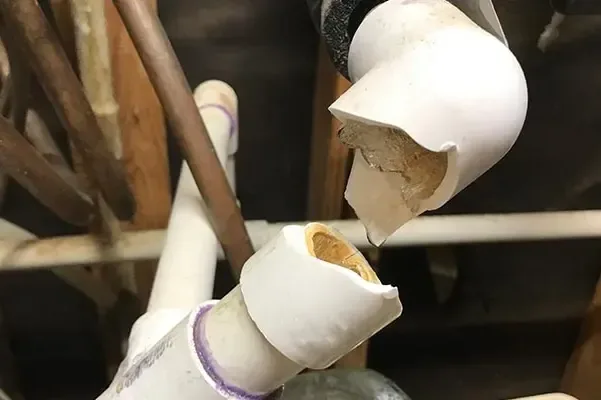
Vancouver, Washington has a mild reputation, but cold east winds blow down the Columbia River Gorge toward the city, and a freezing spell here can catch pipes off guard.
Key takeaways
- Cold east winds blow down the Columbia River Gorge toward the city, pushing wind chill against exterior walls.
- Silver thaw storms, where freezing rain cakes tree limbs and power lines, have struck here.
- January lows average about 34 degrees, and the record low is 10 below zero.
- Heavy snow is infrequent, with major snowstorms every 2 to 4 years, so pipes may not be protected.
- Damage from a frozen pipe usually shows up at the thaw, when a split pipe starts to run.
A mild city with sharp cold spells
The city has 190,915 people on the north bank of the Columbia River, directly north of Portland, Oregon, in Clark County, Washington.
Rain falls often in fall, winter and spring, then stops around mid June, with dry warm weather through September. Winter is mild most years, which is exactly why a hard freeze surprises people.
The Gorge wind effect
Cold east winds blow down the Columbia River Gorge toward the city. The wind does not make the air colder than the thermometer says, but it strips heat from anything exposed.
A pipe in an exterior wall, a crawl space vent area or an unheated garage loses heat faster in that wind. The same pipe may be fine at the same temperature on a still night.
- Pipes in exterior walls on the windward side.
- Pipes near foundation vents and garage doors.
- Hose bibs that were not shut off and drained.
- Pipes in attics and unheated utility rooms.
Silver thaw and cold history
The area has seen silver thaw storms, where freezing rain cakes tree limbs and power lines. A silver thaw in 1916 cut electric power in the city for almost two weeks.
Power outages matter for pipes because the heat goes off with the electricity. A house without heat in a freezing spell loses its margin quickly.
January lows average about 34 degrees F, and the record low is 10 degrees below zero F. Heavy snow is infrequent, and major snowstorms come only every 2 to 4 years, so many homes are simply not prepared when one arrives.
What a power outage does to pipes
Silver thaw storms bring down limbs and power lines, and an outage takes the furnace with it. A house with no heat in a freezing spell cools from the outside in, and the first pipes to freeze are in the exterior walls.
Households sometimes leave for a warmer place during an outage. A vacant house with the water on is the worst case, because a split pipe can run for days before anyone sees it.
- Shut off the master valve before leaving a house without heat.
- Drain the pipes by opening the lowest faucet once the water is off.
- Ask a neighbor to look in if the outage runs long.
- Restore heat before turning the water back on.
Before the freeze
A few steps cost very little and prevent a lot of trouble. They are worth doing when the forecast turns cold.
Garages and attics deserve a look too. A water heater in an unheated garage, a utility sink in a shop or a pipe run in an attic can freeze before the rest of the house feels the cold.
Foam sleeves on exposed pipe and weatherstripping on garage doors cost little and slow heat loss. Sealing gaps where pipes pass through exterior walls blocks the wind from reaching them.
- Disconnect garden hoses and cover hose bibs.
- Open cabinet doors under sinks on exterior walls so room heat reaches the pipes.
- Let a faucet drip on the coldest nights.
- Know where the master valve is and make sure it turns.
- Keep the heat on and set above freezing if the house will be empty.
When a pipe has frozen
A frozen pipe is a warning that a split may exist, even if no water is running. Ice can open a seam that only leaks once thawed.
One more rule matters: do not assume a pipe that thawed is a pipe that survived. A hairline split can drip behind a wall for days, so a damp spot or a spike in the water meter after a freeze deserves a closer look.
Water stains that appear on a ceiling a day or two after a cold spell often trace back to a pipe in the attic or in the wall above.
- Shut off the master valve before thawing anything.
- Open the faucet nearest the frozen section so water can leave as it thaws.
- Warm the pipe slowly with a hair dryer or warm towels.
- Never use an open flame.
- Watch the pipe for leaks as it thaws, and shut the valve again at the first sign.
Why the thaw is the risky part
The leak often begins when the ice melts. A split that was plugged by ice becomes an open hole, and water runs into the wall or floor until someone notices.
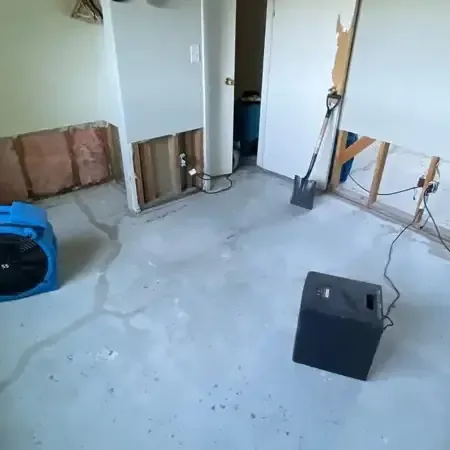
The cleanup after a freeze thaw
When a pipe splits, the work is a combination of frozen pipe water damage repair and a burst pipe response. The water is shut off, standing water is extracted and wet materials are mapped.
Insulation in wet walls is often pulled because it holds water. Drywall that is soaked through is cut out above the water line so the cavity can dry.
If the leak ran for a while, the ceiling below may be wet too. A burst pipe water damage cleanup follows the water down through the floors.
Ceilings take a beating when a pipe splits above them. Drywall that sags, stains that spread and paint that bubbles are signs that water has pooled in the joist bay.
A small relief opening in the sagging drywall lets the water drain in a controlled way instead of dropping all at once.
- Extraction removes the standing water.
- Moisture meters map the wet wall and ceiling.
- Air movers and dehumidifiers dry the cavity.
- Readings confirm the materials are dry before repairs.
Preventing a repeat
After a freeze, the cold spots are known. Pipes that froze once will freeze again in the same conditions.
Added insulation, rerouted pipe or heat cable on exposed runs reduces the risk. A pipe freeze risk check helps an owner think through the weak points before the next cold snap.
Rentals, vacant units and second homes
A split pipe in an occupied house is noticed fast. In a vacant rental, a closed vacation home or a unit between tenants, it can run quietly.
Landlords and owners who manage empty properties are well served by a checklist in winter. A visit after any freezing night catches ceiling stains, wet carpet and running meters.
Water on the floor of an empty unit often means the ceiling below it is wet as well. Multi unit buildings carry that risk across several homes.
Questions
Is this the Vancouver in Washington State?
Yes. This is Vancouver, Washington, the county seat of Clark County on the north bank of the Columbia River.
What is a silver thaw?
It is a storm where freezing rain cakes tree limbs and power lines with ice. One in 1916 cut electric power for almost two weeks.
How cold does it get here?
January lows average about 34 degrees F, and the record low is 10 degrees below zero F.
How often do major snowstorms hit?
Heavy snow is infrequent, and major snowstorms come only every 2 to 4 years.
Why do pipes leak after a freeze, not during it?
Ice can plug a split. When the ice melts, the hole opens and water starts to run into the wall or floor.