Burst Pipe Water Damage in Vancouver, WA
A burst supply pipe can soak a wall, a ceiling and the floor below in a short time. The mitigation team extracts the water, opens the wet areas and dries them with measured care.
(888) 509-1696 Stop the soaking and dry it- Wall and ceiling opening
- Floor and subfloor drying
- Readings kept
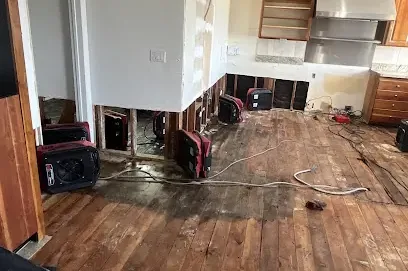
First steps for burst pipe water damage, before the crew arrives
- 1
Close the main valve
Cut off the water supply first so the broken pipe stops running.
- 2
Switch off power nearby
Turn off circuits to wet rooms only if the panel is dry and safe to reach.
- 3
Capture the damage
Photograph the burst section, wet walls and damaged belongings.
- 4
Call for drying
Phone the mitigation team so extraction can start before moisture sinks into framing.
How burst pipe water damage is handled, start to dry
The tech who does the walkthrough maps moisture before any equipment goes down, so the drying plan matches what is actually wet. Equipment stays until the readings say dry, not until it looks dry.
- 1
Extract
Standing water comes off floors first.
- 2
Open
Wet drywall and ceilings are cut back to find the edge of the moisture.
- 3
Dry
Air movers and dehumidifiers run while meters track progress.
- 4
Confirm
Final readings show the framing is dry before equipment leaves.
What does burst pipe water damage cost in Vancouver, WA?
One wall or room usually costs $1,500 to $5,000 to dry after a burst pipe. When the ceiling and the floor below get wet, expect $5,000 to $12,000, and a whole level can pass $25,000.
One wall or room
$1,500 to $5,000
- Water extraction
- Wall section opened
- Equipment drying
Ceiling and floor below
$5,000 to $12,000
- Ceiling removal
- Two levels dried
- Insulation replaced
Whole level
$12,000 to $25,000+
- Level wide demolition
- Longer drying run
- Daily readings
Ranges are typical, not a quote: the category of water, the square footage, the material class and how fast drying started move the number most. Run the water damage cost calculator for a closer planning range.
A burst pipe pushes pressurized water into a building, and within a short time it can soak drywall, flooring and the ceiling below. Housing in Vancouver ranges from Victorians and bungalows to neighborhoods built in the 1980s and 1990s such as Airport Green, and each building type dries a little differently. The main burst pipe service lays out the standard method.
The first hour after the break
Shutting the main valve is the priority, followed by moving belongings and cutting power to wet areas where that is safe. Photos taken before cleanup help the claim later.
A burst pipe keeps soaking the building until it is dried, so contact the crew now.
How the mitigation team dries it
- Extraction of standing water
- Removal of soaked baseboards and drywall
- Air movers aimed at open cavities
- Dehumidifiers to pull moisture from the air
Why speed matters
Wet wood and drywall begin to host mold within a day or two. A fast response keeps the damage to one section and makes the structural drying stage shorter.
What the broken pipe leaves behind
Even after the water stops, wet drywall, baseboards and flooring keep holding moisture and spreading it into neighboring materials. Paint may bubble, wood floors may cup and ceilings below may stain, all signs that water went deeper than the surface shows.
A plumber replaces the split section, and the drying work can run at the same time. Keep the old pipe section if possible, since it helps the plumber and the carrier understand what failed.
Where the burst pipe water damage crews work
Burst pipe work reaches Vancouver homes of every age, from vintage houses in Arnada to the Airport Green area, across ZIP codes 98660 to 98666 and the neighborhoods along Fourth Plain.
The same service nearby: burst pipe water damage in Camas, Fairview, Gresham.
Every water damage service in this town · every town covered
Related water damage services in Vancouver
Burst Pipe Water Damage questions in Vancouver, WA
Short answers about burst pipe water damage, from the first hour to the last reading.
What causes a pipe to burst?
Freezing is the best known cause, but pressure spikes, aging fittings and worn connections can also split a supply pipe. A plumber finds the exact cause.
Can the water be shut off at the street?
Most homes have a main valve inside. If it cannot be found or will not close, the utility can be contacted about the supply.
Do ceilings always have to come down?
Not always. A small stain may dry through a small opening, but a sagging ceiling or soaked insulation is usually removed.
How long until the home is dry?
It depends on the materials and the volume of water. Meter readings, not a calendar, decide when drying is complete.
Is hardwood salvageable after a burst pipe?
Sometimes. Boards that are caught early can be dried with special mats, while cupped and buckled floors are often replaced. Cupped boards are replaced during repairs.
Who repairs the broken pipe?
A plumber repairs the pipe. The drying team handles water removal and moisture control, then the owner schedules rebuilding.
Should the broken section be saved?
Yes, if it can be kept safely. The damaged piece shows the plumber and the carrier what failed and can support the claim.
Still dealing with it?
Dry after the burstBurst pipe damage deserves a drying plan
Describe the broken pipe, the rooms that got wet and how long it ran, and the mitigation team will outline the next steps.