Structural Drying in Vancouver, WA
Fans on a wet floor are not a drying plan. The drying team measures framing, drywall and floors, places equipment on purpose and checks the readings on every visit.
(888) 509-1696 Plan the drying properly- Meter mapped
- Air movers placed
- Dehumidifiers sized
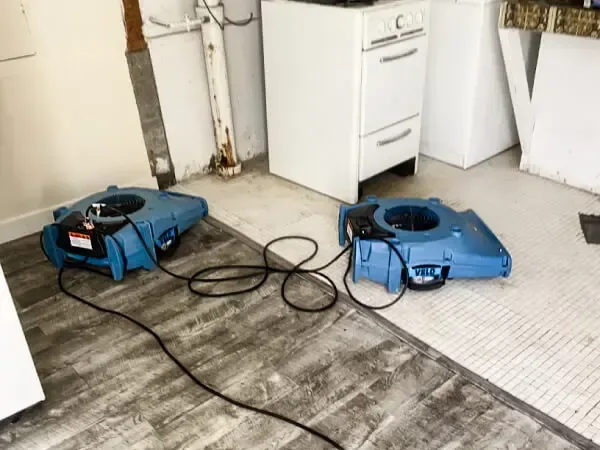
First steps for structural drying and dehumidification, before the crew arrives
- 1
Map the moisture
Meters check floors, walls and ceilings to locate the wet materials.
- 2
Set the equipment
Air movers and dehumidifiers are placed to match the room.
- 3
Monitor the readings
Readings are logged on every visit to show progress.
- 4
Remove the equipment
Machines leave once the numbers match the dry goals.
How structural drying and dehumidification is handled, start to dry
The tech who does the walkthrough maps moisture before any equipment goes down, so the drying plan matches what is actually wet. Equipment stays until the readings say dry, not until it looks dry.
- 1
Measure
Meters outline the wet area.
- 2
Place
Equipment is set to move air across wet materials.
- 3
Track
Readings are logged at every visit.
- 4
Close
Dry goals confirm that the structure is dry.
What does structural drying and dehumidification cost in Vancouver, WA?
Drying one room, Class 1 or 2, commonly costs $1,000 to $3,000. Several rooms or a Class 3 loss run $3,000 to $8,000, and Class 4 materials can reach $15,000.
One room, Class 1 or 2
$1,000 to $3,000
- Meter mapping
- Fans and dehumidifier
- Daily readings
Several rooms or Class 3
$3,000 to $8,000
- More equipment
- Wall cavities
- Longer run
Class 4 materials
$8,000 to $15,000+
- Dense materials
- Specialty drying
- Extended monitoring
Ranges are typical, not a quote: the category of water, the square footage, the material class and how fast drying started move the number most. Run the water damage cost calculator for a closer planning range.
With rain from fall to spring, wet framing and drywall in Vancouver homes need a measured drying plan, not just surface fans. Moisture hides in wood, insulation and wall cavities, and the air in a damp building holds more water than most owners expect. The main structural drying service explains the full process.
How drying is planned
Meters map the wet materials, and the crew places air movers where they push air across them. Dehumidifiers are sized to the volume of the space so water leaves the air as well.
A building dries by the numbers, so a measured plan is worth starting early.
What gets tracked
- Moisture content of framing and drywall
- Temperature and humidity of the air
- Equipment placement and changes
- Dry reference points for each material
When drying is done
The work ends when the materials reach dry goals, not on a set day. Owners with a recent leak can use the drying time estimator to get a rough idea of the timeline.
Why drying takes planning
Materials release water at different speeds. Hardwood, plaster and thick framing hold moisture far longer than thin drywall, so equipment is moved and adjusted rather than left in one position until the job ends. Dense materials sometimes need targeted drying mats or extra time.
A musty smell, cupped flooring, warm damp air and paint that bubbles again are signs moisture is still inside. Readings, not appearance, settle the question.
Where the structural drying and dehumidification crews work
Structural drying runs across Vancouver, from downtown houses to apartments near Fourth Plain, in ZIP codes 98660 to 98666 and the neighborhoods around Orchards and Felida.
The same service nearby: structural drying and dehumidification in Camas, Fairview, Gresham.
Every water damage service in this town · every town covered
Related water damage services in Vancouver
Structural Drying and Dehumidification questions in Vancouver, WA
Short answers about structural drying and dehumidification, from the first hour to the last reading.
How long does structural drying take?
It depends on the materials, the volume of water and the air. Readings, not a calendar date, decide when it is done.
Why are dehumidifiers needed?
Air movers lift moisture from materials into the air, and dehumidifiers pull it out so it does not settle elsewhere.
Can drywall be saved?
Drywall that was wet briefly and clean can often be dried in place. Sagging or contaminated drywall is usually removed.
What are drying classes?
Classes describe how much water materials absorbed and how fast they release it, from Class 1 to Class 4.
Is the equipment loud?
Fans and dehumidifiers make steady noise, which is normal during the drying run.
How is progress shown?
Moisture readings are logged on each visit, and the log can be shared with the carrier.
Can a building look dry but still be wet?
Yes. Surfaces dry first while wood and drywall cores stay damp, so meters check inside the materials before equipment is removed.
Still dealing with it?
Plan the drying runDry framing, drywall and floors properly
Describe what got wet and how long it sat, and the drying team will lay out equipment and a plan to match.