Appliance and Supply Hose Leaks in Fairview, OR
A failed washer hose or dishwasher supply can run for hours behind a closed door. The response team extracts the water, dries floors, cabinets and walls and checks the unit below.
(888) 509-1696 Report a washer or fridge leak- Floors and cabinets dried
- Unit below checked
- Supply hoses isolated
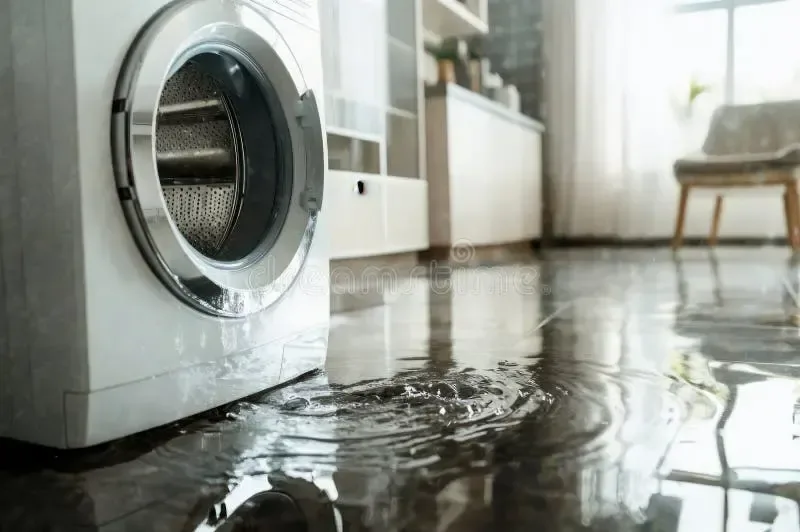
First steps for appliance and supply hose leaks, before the crew arrives
- 1
Close the supply
Turn off the shutoff valve behind the appliance, or the supply to the whole unit.
- 2
Extract the water
Wands and pumps remove standing water from the floor and cabinet bases.
- 3
Measure behind
Meters check the wall base, subfloor and the unit or room below.
- 4
Dry the area
Air movers and dehumidifiers run until moisture readings are normal again.
How appliance and supply hose leaks is handled, start to dry
The tech who does the walkthrough maps moisture before any equipment goes down, so the drying plan matches what is actually wet. Equipment stays until the readings say dry, not until it looks dry.
- 1
Shut off
The appliance supply or the whole unit supply is closed.
- 2
Extract
Standing water is removed from floors and cabinet bases.
- 3
Measure
Meters check walls, subfloor and the unit below.
- 4
Dry
Equipment runs until all readings come back dry.
What does appliance and supply hose leaks cost in Fairview, WA?
Appliance leaks cost $800 to $3,000 when one floor is caught early, $3,000 to $7,000 once cabinets and walls are wet and $7,000 to $12,000+ when the floor below is reached.
One floor, caught early
$800 to $3,000
- Water extraction
- Floor drying
- Moisture check
Cabinets and walls
$3,000 to $7,000
- Cabinet base drying
- Wall base opened
- Dehumidifier drying
Floor below reached
$7,000 to $12,000+
- Ceiling drying below
- Two unit moisture mapping
- Extended monitoring
Ranges are typical, not a quote: the category of water, the square footage, the material class and how fast drying started move the number most. Run the water damage cost calculator for a closer planning range.
Appliance leaks are quiet. A cracked supply hose, a clogged drain or a failed ice maker valve can drip behind a cabinet or inside a wall for days, and the first sign is often a soft floor or a stain in the unit below. Early notice limits the damage, but hidden moisture still needs to be measured.
Rentals, condos and townhouses
About 47.9% of occupied housing units in town were renter-occupied in 2020, so a leak in one apartment, townhouse or condo can reach a neighbor. Tenants should photograph the water and report the leak to the landlord or property manager, who can shut off the unit supply and notify the building.
A leaking appliance can soak the floor and the unit below long before it is noticed.
What gets dried
After an appliance leak, the crew works on:
- Vinyl, tile or wood flooring under the appliance
- Cabinet bases and toe kicks
- Drywall at the wall base
- Subfloor and the ceiling of the unit below
Stop it, then measure
The supply to the appliance is closed first, then standing water is extracted. Meters check behind and under the unit, since the visible puddle is rarely the whole story. For larger releases see burst pipe cleanup, and for the drying itself see structural drying.
Where the appliance and supply hose leaks crews work
Appliance leak calls cover apartments, townhouses, condos and houses across the 97024 ZIP code, including the units above shops in the Village and rentals near Interlachen.
The same service nearby: appliance and supply hose leaks in Camas, Troutdale, Gresham.
Every water damage service in this town · every town covered
Related water damage services in Fairview
Appliance and Supply Hose Leaks questions in Fairview, WA
Short answers about appliance and supply hose leaks, from the first hour to the last reading.
Which appliances leak most often?
Washing machines, dishwashers, refrigerators with ice makers and water heaters. Most failures start at supply hoses and fittings.
Who pays when a leak damages the unit below?
That depends on the lease, the building rules and the policies involved. The crew documents moisture and cause so everyone has a clear record.
Can a floor dry without being replaced?
Often yes. Vinyl and tile usually dry fine, and wood may cup and then recover, depending on how long it stayed wet.
Why check behind and under the appliance?
Water collects under the unit and runs into cabinet bases and the wall bottom, where it cannot be seen. Meters find it.
Is a slow drip worth reporting?
Yes. A slow drip can soak a subfloor for months before it shows. Report it to the landlord and photograph the area.
Still dealing with it?
Describe the washer or hose leakA hose leak in one unit can reach the next
The response team can explain how the supply is isolated, what gets dried and what to share with the landlord or insurer.