Commercial Water Damage in Fairview, OR
A leak in a shop, office or food business stops normal work until it is dry. The response team extracts water, stages drying around the work area and documents the loss for the carrier.
(888) 509-1696 Get a business water loss assessed- Shops and offices
- Food businesses
- Multi unit buildings
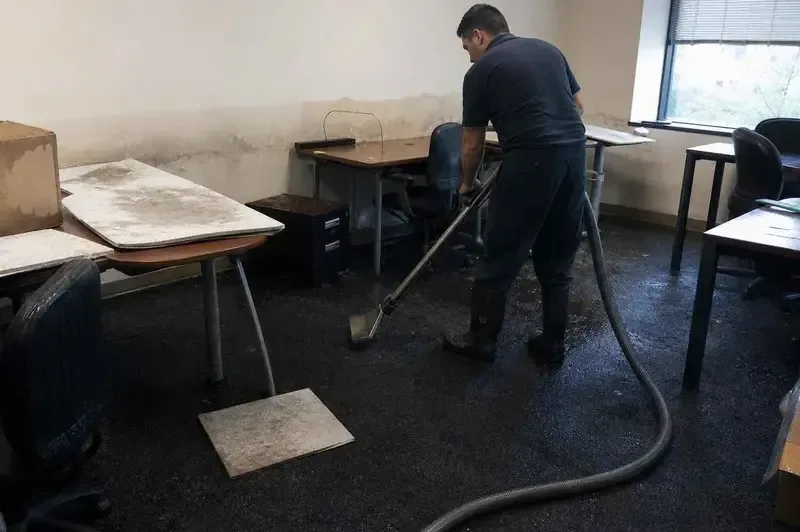
First steps for commercial water damage, before the crew arrives
- 1
Scope the loss
Meters and thermal imaging map what is wet in each suite or work area.
- 2
Contain and extract
Containment protects dry areas while pumps remove standing water.
- 3
Stage the drying
Equipment is placed to dry affected suites with the least disruption.
- 4
Document it
Moisture logs and photos support the property manager and carrier.
How commercial water damage is handled, start to dry
The tech who does the walkthrough maps moisture before any equipment goes down, so the drying plan matches what is actually wet. Equipment stays until the readings say dry, not until it looks dry.
- 1
Scope
Each suite or work area is metered and mapped.
- 2
Contain
Dry spaces are protected so work can continue where possible.
- 3
Extract
Water is pumped out and wet materials are removed.
- 4
Dry
Equipment is staged and logs are kept until readings are dry.
What does commercial water damage cost in Fairview, WA?
Commercial jobs run $3,000 to $10,000 for one suite or shop, $10,000 to $35,000 for several suites or units and $35,000 to $75,000+ for a large floor or building. Building size and operations decide most of it.
One suite or shop
$3,000 to $10,000
- Extraction and containment
- Targeted drying
- Moisture logs
Several suites or units
$10,000 to $35,000
- Multi suite scoping
- Staged drying zones
- Carrier documentation
Large floor or building
$35,000 to $75,000+
- Large scale extraction
- Industrial dehumidification
- Extended project monitoring
Ranges are typical, not a quote: the category of water, the square footage, the material class and how fast drying started move the number most. Run the water damage cost calculator for a closer planning range.
Water in a business hits operations as well as property. Inventory, shared walls and neighboring suites all raise the stakes, so the work begins with scoping what is wet and what can stay open while drying proceeds. Each type of business has different priorities, from keeping a dining room usable to protecting records and inventory.
Food businesses
Food processing is part of the local economy, and a berry freezing cannery is one of the businesses in town. Floors, drains and wash areas in food buildings are cleaned and sanitized as well as dried, and the sanitation steps are documented.
Water in a business space disrupts work until it is contained and dried.
Planning around operations
A commercial plan usually includes:
- Containment so unaffected suites stay open
- Drying staged by suite or work area
- Scheduling around business hours
- Moisture logs for property managers and carriers
Property managers and tenants
In multi tenant buildings the source suite, neighbors and shared walls are all scoped together. Early budgeting can use the cost calculator, and the drying method matches structural drying. Drying notes are written so a property manager can answer questions from tenants and the carrier.
Where the commercial water damage crews work
Commercial work covers shops, offices, restaurants and units across the 97024 ZIP code, including mixed use buildings in the Village with condos above shops.
The same service nearby: commercial water damage in Camas, Troutdale, Gresham.
Every water damage service in this town · every town covered
Related water damage services in Fairview
Commercial Water Damage questions in Fairview, WA
Short answers about commercial water damage, from the first hour to the last reading.
Can a business stay open during drying?
Often, yes. Containment and staged equipment keep unaffected areas usable, though noise and airflow in the work zone may limit what can happen there while equipment runs.
What happens in a food business?
Water is extracted and drying runs as usual, while floors, drains and food contact surfaces are cleaned and sanitized and the steps are written down for inspections and the carrier.
Who handles a leak that started in another suite?
The tenant reports to the property manager, who arranges access to the source. The crew scopes every affected suite and documents the path of the water.
How are records kept for the insurer?
Photos, moisture logs, equipment records and a list of removed materials go to the property manager, who can pass them to the carrier for the claim.
Is commercial pricing different?
Yes. Building size, number of suites and operating hours change the plan and the cost. The ranges shown are typical, and a walkthrough narrows them.
Still dealing with it?
Tell the crew about the buildingGet the business space dry again
The mitigation team can explain how the loss is scoped, how dry areas stay protected and what records are kept.