Storm Runoff and Flood Cleanup in Washougal, WA
When heavy rain pushes water into a basement, garage or ground floor, the response team pumps it out, removes soaked materials and cleans every surface the runoff touched.
(888) 509-1696 Flooded after the storm? Call the crew- Pump-out and debris removal
- Floodwater surface sanitizing
- Structure drying and readings
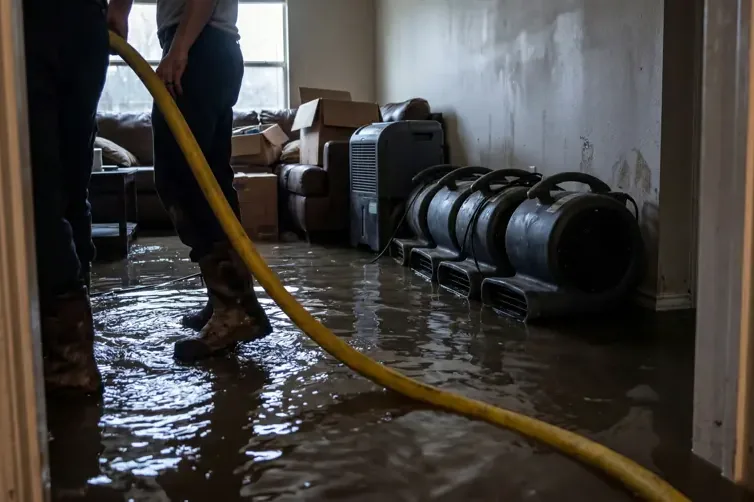
First steps for storm runoff and flood cleanup, before the crew arrives
- 1
Stay out
Keep out of flooded rooms until power is shut off by breaker.
- 2
Protect your health
Wear boots and gloves if you must enter; avoid touching the water.
- 3
Move valuables
Carry papers and electronics to a dry upper spot.
- 4
Document the flood
Photograph the waterline on walls and the damaged contents.
How storm runoff and flood cleanup is handled, start to dry
The tech who does the walkthrough maps moisture before any equipment goes down, so the drying plan matches what is actually wet. Equipment stays until the readings say dry, not until it looks dry.
- 1
Assess
Depth, source and safety are checked before work starts.
- 2
Pump out
Pumps clear the water; debris and mud are hauled away.
- 3
Clean
Surfaces get cleaned and sanitized after contaminated materials go.
- 4
Dry
Dehumidifiers and air movers dry what remains.
What does storm runoff and flood cleanup cost in Washougal, WA?
Storm and flood cleanup usually costs $3,000 to $8,000 for a crawl space or a single room, and $8,000 to $20,000 when a lower level floods. Several flooded levels can reach $20,000 to $40,000+.
Crawl space or one room
$3,000 to $8,000
- Pump-out
- Debris removed
- Surfaces sanitized
Lower level flooded
$8,000 to $20,000
- Large pump set
- Drywall and flooring removed
- Extended drying period
Several levels
$20,000 to $40,000+
- Multiple crews
- Contents handling
- Full structural drying
Ranges are typical, not a quote: the category of water, the square footage, the material class and how fast drying started move the number most. Run the water damage cost calculator for a closer planning range.
Runoff and flood water carries soil, bacteria and debris, so it is handled as contaminated from the start. The goal is to get it out, take away what cannot be saved and clean the structure before drying begins. Acting early keeps floodwater out of the framing, which is where the costly repairs start.
Rain, rivers and saturated ground
The Washougal River basin covers 212 square miles and is about 63 percent forested, and the river has recorded a maximum flow of 40,400 cubic feet per second, against an average of 873. The December 2025 atmospheric river, which brought heavy rain across western Washington from December 8 to 11 on already saturated soil, showed how fast ground that cannot absorb more water floods.
Storm water inside the house? The response team is ready 24/7.
What flood cleanup includes
The scope is wider than a plumbing leak, because the water carries what it picked up outside.
- Pumping standing water and hauling it away
- Removing carpet, pad and soaked drywall
- Cleaning and sanitizing hard surfaces
- Drying framing and floors with dehumidifiers
Keeping people safe in the meantime
Floodwater can hide hazards such as sharp debris, slick mud and live outlets, so power stays off in wet areas and nobody should wade in without boots, gloves and eye protection. The crew uses protective gear, containment and air scrubbing where needed. Related water-removal work is covered under water extraction, and long wet seasons also test the roof, see roof leak water damage.
Where the storm runoff and flood cleanup crews work
The response crews serve ZIP 98671, from low spots near the Columbia River and the Washougal River to homes along State Route 14 and around Hathaway Park.
The same service nearby: storm runoff and flood cleanup in Camas, Troutdale, Fairview.
Every water damage service in this town · every town covered
Related water damage services in Washougal
Storm Runoff and Flood Cleanup questions in Washougal, WA
Short answers about storm runoff and flood cleanup, from the first hour to the last reading.
Is flood water considered contaminated?
Yes. Runoff and river water carry soil, bacteria and debris, so it is treated as Category 3. Porous materials such as carpet and pad that it soaked are normally removed.
Can I stay in the house during cleanup?
It depends on the level of damage and the work areas. Power stays off in wet rooms, and the crew can tell you which areas are safe to use.
Does flood damage need special insurance?
Policies differ. Many standard homeowner plans exclude surface flood water, while sudden pipe failures are usually covered, so read the policy or ask the agent before the claim.
How long does flood drying take?
It varies with depth, materials and how long the water stood. The crew checks readings on each visit and stops equipment only when they match a dry reference.
What happens to soaked belongings?
Items that wicked up flood water are sorted into restorable and unrestorable piles. Hard goods can often be cleaned, while upholstery and mattresses usually are not saved.
Does heavy rain mean a roof leak too?
Sometimes. A storm can send water in at the roof and from the ground at once, and the two losses are dried together. Photos help show which water came from where.
Still dealing with it?
List the wet roomsFloodwater carries bacteria, and delay only spreads it deeper.
Stay out of the water, shut off the power, then call. Pumps, hauling and sanitizing come first, then drying.