Water Extraction in Washougal, WA
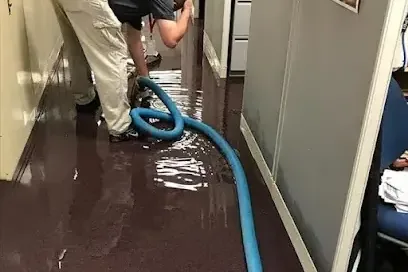
After a long run of wet weather or a failed pipe, water can sit in a room for days. The extraction crew pumps and vacuums it from floors and carpet before it travels into the walls.
(888) 509-1696 Water on the floor? Call for extraction- Pumps and wand vacuums
- Carpet, pad and cabinet drying
- Moisture mapping after removal
First steps for water extraction and removal, before the crew arrives
- 1
Stop the source
Close the main or fixture valve so no more water reaches the floor.
- 2
Cut the power
Keep breakers off for wet rooms and never stand in water near outlets.
- 3
Lift small items
Move rugs, shoes and books to a dry spot before they stain.
- 4
Photograph the water
Record the depth and affected rooms before anything is moved.
How water extraction and removal is handled, start to dry
The tech who does the walkthrough maps moisture before any equipment goes down, so the drying plan matches what is actually wet. Equipment stays until the readings say dry, not until it looks dry.
- 1
Survey
Meters and a thermal camera show where the water traveled.
- 2
Extract
Pumps and vacuums pull standing water from every wet surface.
- 3
Remove pad
Soaked carpet pad comes out; the carpet itself is often saved.
- 4
Verify
Readings are recorded and the room is handed to the drying stage.
What does water extraction and removal cost in Washougal, WA?
Water extraction usually costs $500 to $1,500 for one room of clean water and $1,500 to $4,000 for several rooms. Crawl space water or Category 3 contamination can reach $3,000 to $8,000 because of containment and disposal.
One room, clean water
$500 to $1,500
- Pump and vacuum
- Floor and pad checked
- Fans for one day
Several rooms
$1,500 to $4,000
- Water in multiple spaces
- Wet pad removed
- Dehumidifier set
Crawl space or Category 3
$3,000 to $8,000
- Containment barriers
- Contaminated water hauled
- Protective gear for workers
Ranges are typical, not a quote: the category of water, the square footage, the material class and how fast drying started move the number most. Run the water damage cost calculator for a closer planning range.
Extraction comes first because water left standing keeps moving. It wicks up drywall, sinks through carpet pad and finds the subfloor. The restoration team removes the bulk of it mechanically, which shortens every step that follows and limits how much material has to be torn out. That speed matters most in winter, when rooms cool and drying slows.
Why wet seasons make it urgent
The city averages about 84.2 inches of precipitation a year over about 180 days with measurable rain, and December is the wettest month at about 13.0 inches. Soil and structures stay damp for weeks, so a plumbing failure or a storm leak lands on materials that are already holding moisture. Pulling the water out early keeps a small loss small. Water follows gravity to the lowest point in the building, which is often a place nobody checks, such as the back of a closet or the floor under a kitchen island.
Water standing in a room? The extraction crew is on call 24/7.
What gets pumped and what gets vacuumed
The method depends on how deep the water is and what it sits on.
- Submersible pumps for water deeper than an inch
- Wand vacuums for carpet, pad and hard floors
- Weighted tools that press water out of wall-to-wall carpet
- Edge and cabinet-base extraction where water pools
After the water is out
Extraction is not drying. Wood, drywall and concrete still hold moisture, so the crew maps it with meters, sets air movers and dehumidifiers, and returns to check readings. Water from a dishwasher or tub overflow is usually clean at first, while floodwater or a sewer backup needs different handling; see sewage backup cleanup for that case, and structural drying for the drying stage. Crews also check baseboards, door thresholds and cabinet kicks, where water hides.
Where the water extraction and removal crews work
The extraction crews work across ZIP 98671, from homes near downtown and Angelo Park to those off State Route 14 and around the Port of Camas-Washougal.
The same service nearby: water extraction and removal in Camas, Troutdale, Fairview.
Every water damage service in this town · every town covered
Related water damage services in Washougal
Water Extraction and Removal questions in Washougal, WA
Short answers about water extraction and removal, from the first hour to the last reading.
How fast does standing water need to come out?
As soon as possible. Water soaks into drywall, baseboard and subfloor quickly, and the damp materials give mold a place to start within the 24 to 48 hour window. Extraction first, drying second.
Can the carpet be saved?
Often yes, when the water was clean and the carpet is extracted promptly. The pad underneath is usually removed, because it holds water and dries slowly. Contaminated water ends that chance.
Does a wet vac do the same job?
A household vacuum recovers a thin layer but misses the water in the pad and subfloor. Truck-mounted units and weighted extraction tools lift far more, and moisture meters show what is left.
Will extraction alone dry the house?
No. Extraction removes the bulk, but framing, drywall and concrete still hold moisture. Air movers and dehumidifiers finish the job, with readings checked until they match a dry reference.
What if the water came from a storm?
Floodwater is treated as contaminated. The crew uses protective gear, hauls the water out and cleans surfaces before drying. See storm runoff and flood cleanup for that scope.
Do I need a permit before extraction starts?
No permit is required before emergency work begins, but one must be applied for on the first business day after work starts if repairs are involved. Plain water removal is mitigation, not new plumbing.
Still dealing with it?
Describe the flooded rooms for the crewEvery day that water sits, it travels further into the structure.
Shut off the source, lift small items, then call. Pumps and vacuums come first, then dehumidifiers pull out what remains.